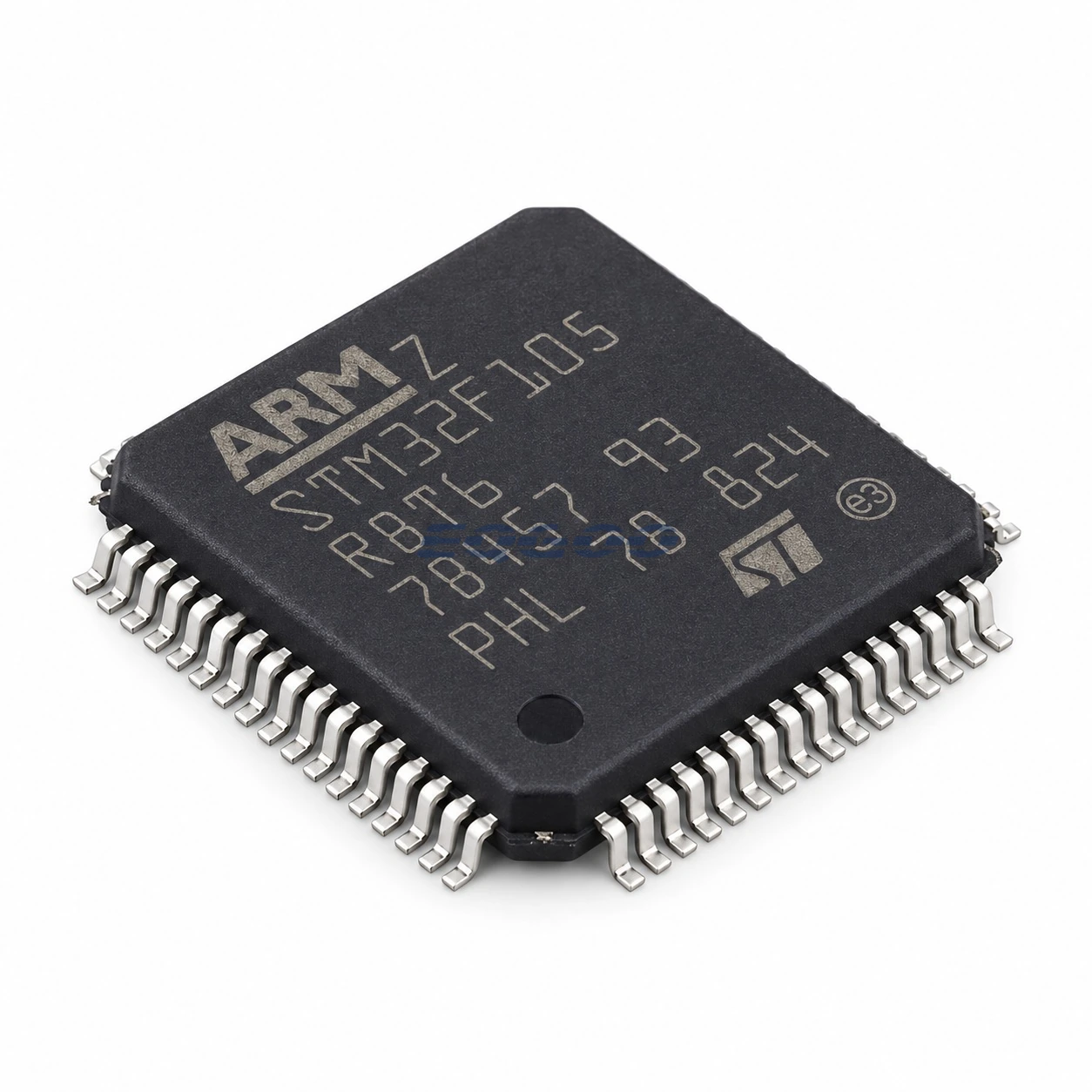
Key Selection Information
| Selection Parameter | Confirmed Information |
|---|---|
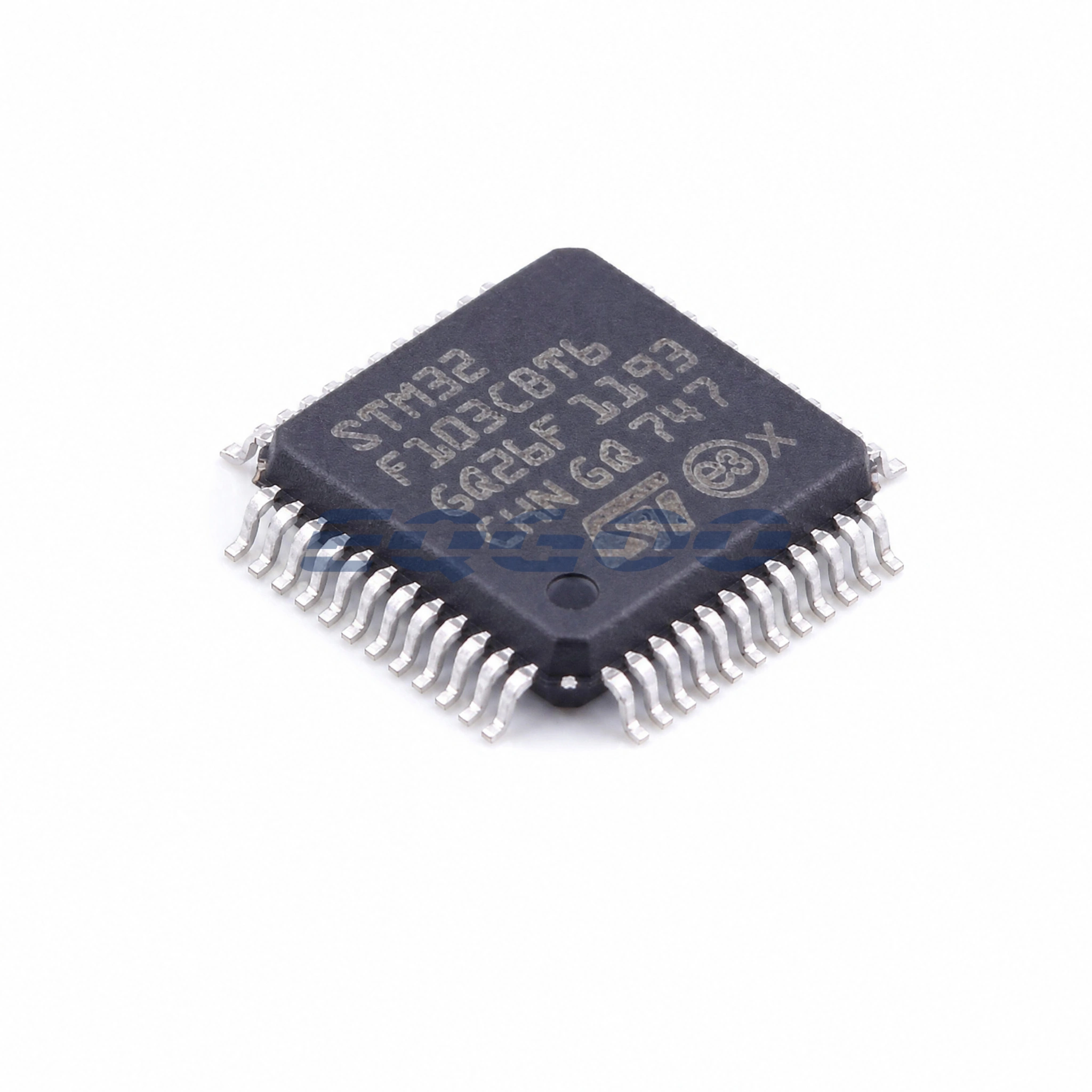
| Package | LQFP-64(10×10) |
| Supply voltage | 2V~3.6V |
| CPU Core | ARM Cortex-M3 |
| Maximum CPU speed | 72MHz |
| Program memory | 128KB |
| Operating Temperature | -40℃~+85℃ |
| Number of I/O | 51 |
STM32F1 connectivity-line profile
STM32F105RBT6 is not simply another 72 MHz STM32F1. It belongs to ST’s connectivity line and combines a Cortex-M3 core with 128 KB of Flash, an industrial LQFP-64 package and 51 I/Os.
The defining peripheral mix is USB 2.0 OTG full-speed plus two CAN controllers, together with three SPI interfaces, three USARTs, two UARTs and two I2S interfaces. That dual-CAN/USB combination is the main selection difference from performance-line STM32F103 parts with similar CPU frequency.
Technical Specifications
| Parameter | Value |
|---|---|
| Package | LQFP-64(10×10) |
| Supply voltage | 2V~3.6V |
| CPU Core | ARM Cortex-M3 |
| Maximum CPU speed | 72MHz |
| Program memory | 128KB |
| Operating Temperature | -40℃~+85℃ |
| Number of I/O | 51 |
| DAC (Bit) | 12bit |
| ADC (Bit) | 12bit |
| Program Memory Type | FLASH |
| Core Size | 32 Bit |
| Oscillator Type | Built-in |
Why RBT6 is a connectivity choice
The RB density fixes 128 KB of Flash and the R/T package combination gives LQFP-64. The part makes sense when the system needs two independent CAN controllers or USB OTG FS without moving to the Ethernet-enabled STM32F107 line.
Bus architecture before firmware
- Two CAN controllers can support separate CAN networks, but each bus still needs its own physical-layer transceiver.
- USB OTG FS expands host/device connectivity compared with basic USB-device implementations, but connector, ESD and power-role details remain board-level work.
- 51 I/Os are available on this orderable; serial, CAN, USB and timer signals still compete for package pins through alternate functions.
Suitable system roles
STM32F105RBT6 is a strong fit for embedded gateways and controllers that bridge USB and CAN or need two CAN networks with a familiar Cortex-M3 software base. It is less suitable when Ethernet is mandatory, when 128 KB of Flash is too small, or when a later Cortex-M generation is required for performance or security.
Connectivity implementation checks
Do not treat CAN and USB controller integration as complete physical interfaces. CAN needs external transceivers and bus protection; USB needs the correct connector, clock, power and ESD implementation. Confirm the LQFP-64 alternate-function map early because simultaneous use of multiple communication blocks can become a pin-allocation problem.
Related Engineering Resources
- STM32F105RBT6 Datasheet (PDF) — HKEQGOO-hosted copy of the STMicroelectronics datasheet used for technical review.
- STMicroelectronics product page — official manufacturer product, lifecycle, ordering and documentation resource.
Quality & Verification Support
Third-party inspection or testing can be arranged according to customer requirements. Testing fees are borne by the buyer. Additional verification requirements can be discussed before shipment. After an order is placed, physical product, label, packaging, and Date Code photos may be provided where appropriate.
Request a Quote
To request a quotation, provide the manufacturer part number, required quantity, destination, target Date Code if applicable, and any testing or inspection requirements.