
Key Selection Information
| Selection Parameter | Confirmed Information |
|---|---|
| Battery Configuration | 1-cell Li-Ion, 4.20 V regulation |
| Charger Architecture | Linear charger with dynamic power-path management (DPPM) |
| Fast-Charge Current | 100 mA to 1.5 A, programmed with RISET |
| Input Current Limit | 100 mA, 500 mA, or programmable 200 mA to 1.5 A |
| Regulated System Output | 4.4 V typical while valid input power is present |
| Input OVP | 6.6 V typical |
| Exact Variant Function | TD input can disable charge termination and safety timers |
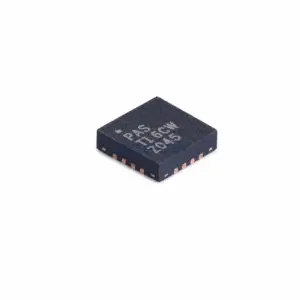
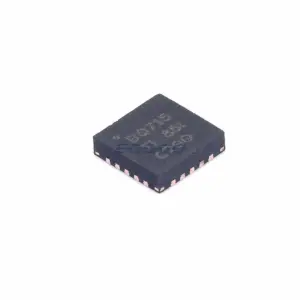
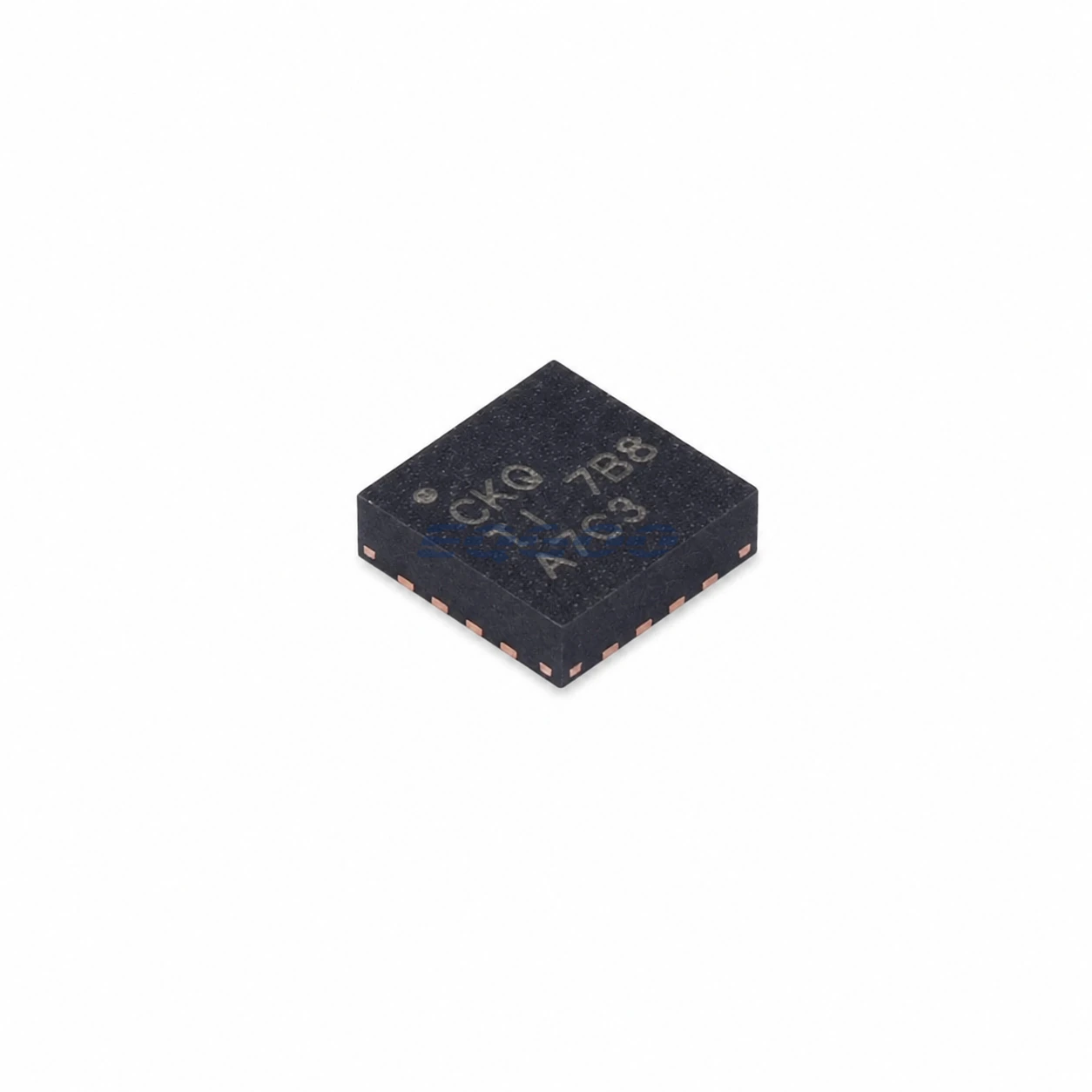
| Exact Package / Packing | VQFN (RGT), 16 pins, 3 mm × 3 mm; 3000-piece large tape and reel |
Product Overview
BQ24073RGTR is a single-cell linear battery charger with integrated dynamic power-path management. Unlike a charger whose system load simply shares the battery node, the BQ24073 can power the system output while independently managing battery charge current. When the input source reaches its current limit or OUT approaches the DPPM threshold, the charger reduces battery current first so the system load retains priority.
The device regulates BAT to 4.20 V and regulates OUT to 4.4 V typical when valid input power is available. If the input source cannot sustain both system and charging demand, DPPM reduces charge current; if more system current is still required, the battery can supplement the system output. This architecture is therefore selected around the combined input-source, system-load, and battery-charge power budget rather than charge current alone.
BQ24073 also provides a TD input that can disable normal charge termination. When TD is high, the charger remains in constant-voltage operation instead of ending the charge cycle, and TI also disables the pre-charge and fast-charge safety timers. TD is consequently a functional mode choice, not just a logic-status pin.
For related charger and power-path architectures, see HKEQGOO’s Battery Chargers category.
Technical Specifications
| Parameter | Verified Information |
|---|---|
| Manufacturer | Texas Instruments |
| Exact MPN | BQ24073RGTR |
| Battery Charge Voltage | 4.20 V typical; 4.16 V minimum, 4.23 V maximum under the stated conditions |
| System Output Regulation | 4.4 V typical; 4.3 V minimum, 4.5 V maximum |
| Recommended Input Operating Range | 4.35 V to 6.4 V for BQ24073 |
| Input OVP Threshold | 6.6 V typical; 6.4 V minimum, 6.8 V maximum |
| Fast-Charge Current Range | 100 mA to 1.5 A |
| Fast-Charge Factor | 890 AΩ typical |
| Programmable Input Limit | 200 mA to 1.5 A using RILIM, plus fixed 100 mA / 500 mA modes |
| DPPM Threshold | Approximately VOUT(REG) − 100 mV typical for BQ24073 |
| Battery Supplement Entry | OUT at or below approximately VBAT − 40 mV under the stated condition |
| Internal Termination Threshold | 10% of fast-charge current typical outside USB100 mode; 3.3% typical in USB100 mode |
| Thermal Regulation | 125°C |
| Thermal Shutdown | 155°C rising, 20°C hysteresis |
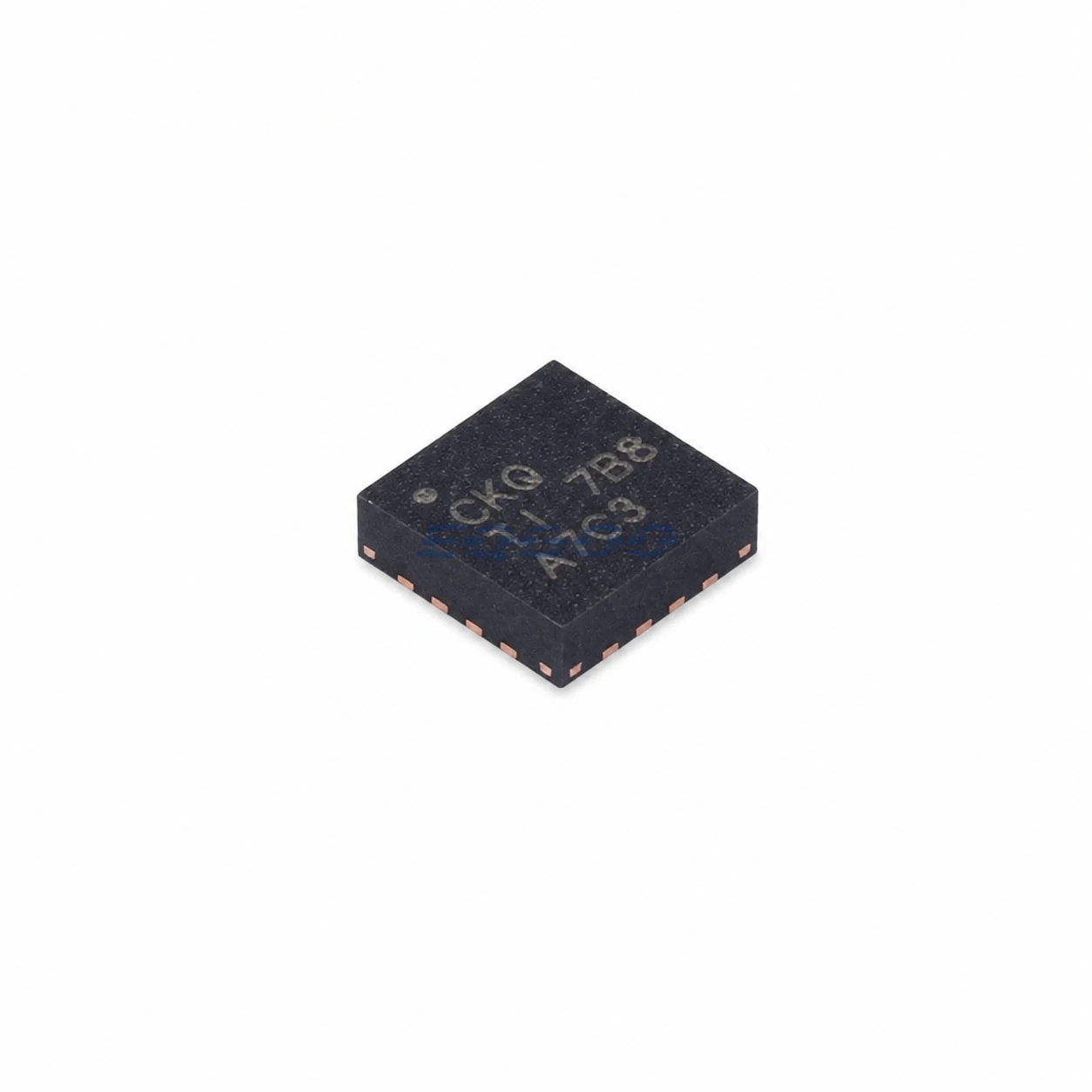
| Package | VQFN (RGT), 16 pins, 3 mm × 3 mm |
| Manufacturer Status | Active / Production |
| Part Marking | CKQ |
Functional Highlights
Power-path control gives the system load priority over battery charging
BQ24073 monitors the input-current limit and the system-output voltage while charging. When source power becomes insufficient, the DPPM loop reduces battery charge current before allowing the system output to fall further. This allows the same adapter or USB source to support a varying system load without forcing the battery-charge target to remain fixed.
If reducing charge current to zero is still insufficient, the battery can enter supplement mode and provide additional current to OUT. The input-current limit, system load, battery state, and programmed ICHG therefore interact dynamically; the fastest programmed battery charge is only available when the source has power left after serving the system.
Charge termination can be deliberately disabled with TD
The BQ24073 TD input changes the end-of-charge state. With TD high, charge termination is disabled and the device remains in the constant-voltage phase rather than completing the normal termination sequence. TI also disables the pre-charge and fast-charge safety timers in this mode.
This can be useful only when the system intentionally needs that behavior and manages its consequences. Leaving TD at the wrong logic level changes both charge completion and timer protection, so the required termination policy should be fixed during schematic design rather than treated as a firmware-only detail.
Design Considerations
- Budget input current between the system and the battery. The 1.5 A charge-current capability is not additive to a 1.5 A input limit. System current is served first when DPPM is active, and battery charge current is reduced accordingly.
- Use the correct input operating range for BQ24073. The wider 28 V absolute input rating is not the normal charging range; this variant has a 6.6 V typical OVP threshold and a 4.35 V to 6.4 V recommended input operating range.
- Do not rely on normal termination while a limiting loop is active. TI states that termination detection is disabled when charge rate is reduced by the thermal loop, DPPM loop, or VIN-DPM loop.
- Program RISET and RILIM as separate functions. RISET sets the desired battery charge current while RILIM sets source-current capability; both are needed to predict actual operation.
- Provide thermal copper for the exposed-pad QFN. At high charge current, linear power loss can force the 125°C thermal loop to reduce current before the programmed 1.5 A target is reached.
Product Status and Exact Order Code
Manufacturer status: Active / Production
Texas Instruments lists BQ24073RGTR as a 16-pin VQFN RGT device in a 3000-piece large tape-and-reel carrier with part marking CKQ. The exact RGTR order code is listed with Level-1-260C-UNLIM MSL classification. The related RGTT option uses the same RGT package in a 250-piece small tape-and-reel carrier, so the final R/T characters matter for procurement quantity and handling.
Related Engineering Resources
Quality & Verification Support
Third-party inspection or testing can be arranged according to customer requirements. Testing fees are borne by the buyer. Additional verification requirements can be discussed before shipment. After an order is placed, physical product, label, packaging, and Date Code photos may be provided where appropriate.
Request a Quote
To request a quotation, provide the manufacturer part number, required quantity, destination, target Date Code if applicable, and any testing or inspection requirements.