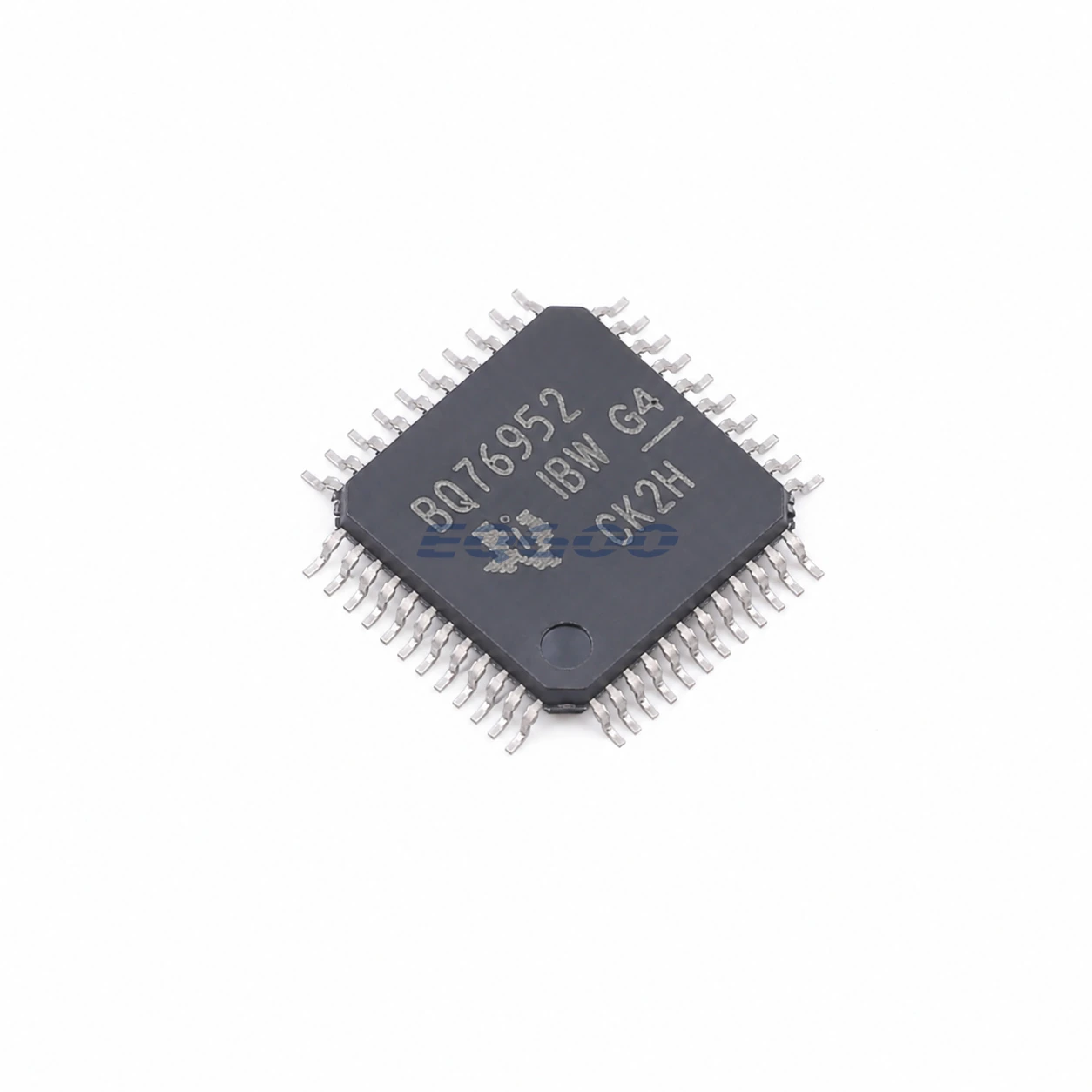

Key Selection Information
| Selection Parameter | Confirmed Information |
|---|---|
| Cell Count | 3 to 16 series cells |
| Chemistry | Li-Ion, Li-Polymer and LiFePO4 |
| Voltage Measurement | Cell-voltage accuracy better than 10 mV typical stated feature |
| Current Measurement | Coulomb-counter offset below 1 µV typical; ±200 mV sense range |
| Protection / FET Control | Configurable protection with charge-pump high-side NFET drivers |
| Temperature | Internal sensor plus support for up to nine external thermistors |
| Communications / Memory | I²C, SPI or HDQ; customer-programmable OTP |
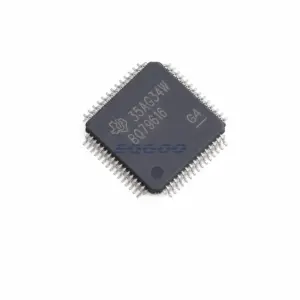
| Exact Package / Packing | TQFP (PFB), 48 pins, 7 mm × 7 mm; 1000-piece large tape and reel |
Product Overview
BQ76952PFBR is a high-integration battery monitor and protector for 3S-to-16S lithium battery packs. It combines per-cell voltage measurement, precision current sensing, temperature measurement, configurable protection, high-side protection-FET drive, cell balancing and multiple host-interface choices in one 48-pin device.
The device is designed for packs where measurement accuracy and configurable protection are both important. TI specifies cell-voltage measurement accuracy better than 10 mV typical and a coulomb-counter input offset below 1 µV typical, while the current-sense path supports a wide ±200 mV differential range. The shunt value still sets the tradeoff between full-scale pack current, measurement resolution and conduction loss.
BQ76952 can work autonomously for selected protection and balancing functions or under host control. Customer-programmable OTP allows production configuration to be stored in the device, so the manufacturing process can determine whether the pack depends on host initialization for critical settings or boots into a predefined hardware configuration.
For related devices, see HKEQGOO’s Battery Management category.
Technical Specifications
| Parameter | Verified Information |
|---|---|
| Manufacturer | Texas Instruments |
| Exact MPN | BQ76952PFBR |
| Cell Count | 3 to 16 series cells |
| Cell Chemistries | Li-Ion, Li-Polymer, LiFePO4 |
| Cell Voltage Accuracy | Better than 10 mV typical stated feature |
| Coulomb Counter Offset | Less than 1 µV typical stated feature |
| Current Sense Range | ±200 mV across external sense resistor |
| Protection Drivers | Integrated charge pump for high-side N-channel FETs |
| Balancing | Autonomous or host-controlled cell balancing |
| Temperature Inputs | Internal sensor plus up to nine external thermistors |
| Interfaces | 400 kHz I²C, SPI, HDQ one-wire |
| LDOs | Dual programmable LDOs for external system use |
| Configuration Memory | Customer-programmable OTP |
| Low-Power Modes | NORMAL 286 µA; SLEEP 24–41 µA; DEEPSLEEP 9–10 µA; SHUTDOWN 1 µA stated typical features |
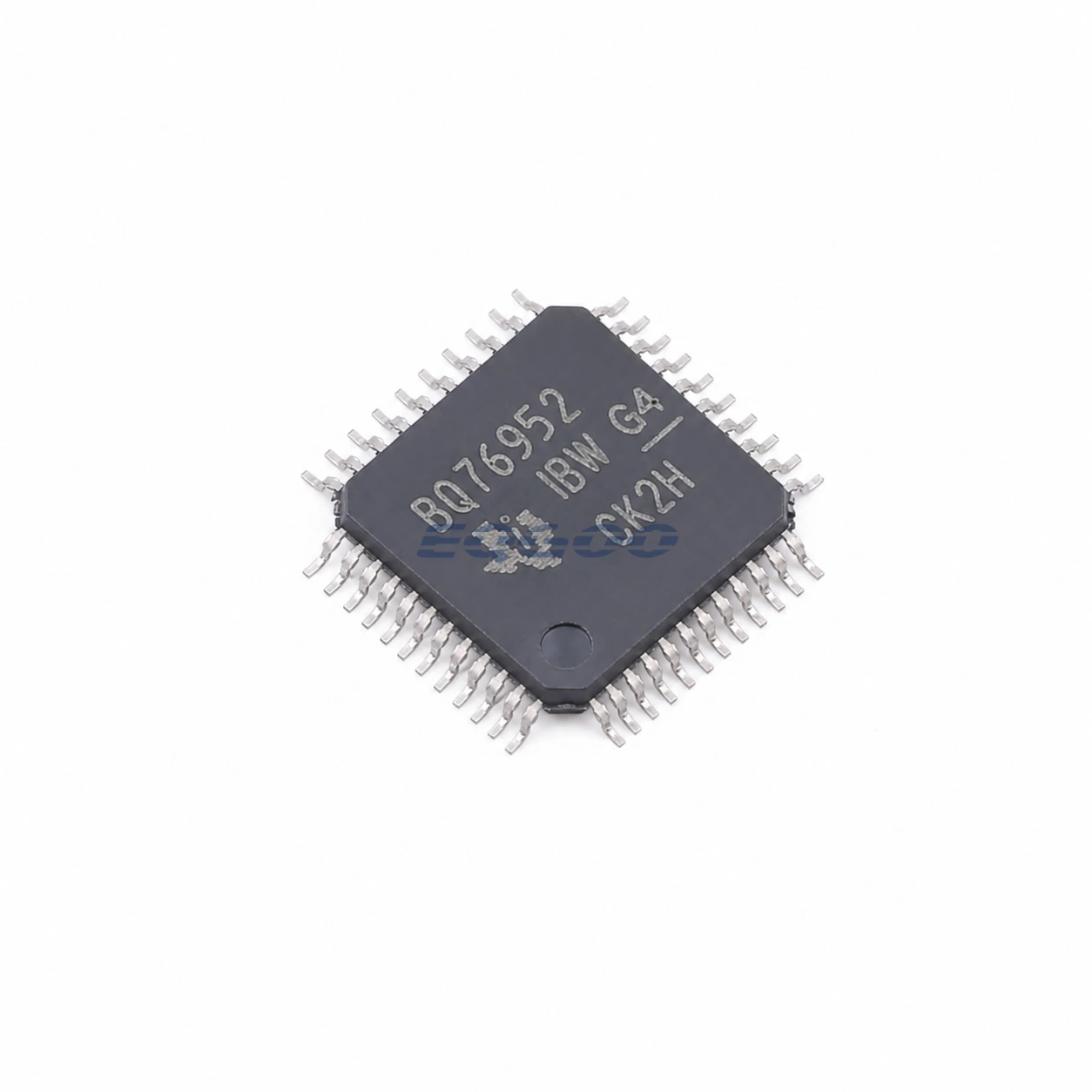
| Package | TQFP (PFB), 48 pins, 7 mm × 7 mm |
| Manufacturer Status | Active / Production |
| Part Marking | BQ76952 |
Functional Highlights
Wide current-sense range makes shunt selection a real system tradeoff
The ±200 mV measurement range can accommodate high-current packs, but the chosen sense resistor determines what current corresponds to full scale. A smaller shunt reduces loss at high current but produces less signal at low current; a larger shunt improves signal amplitude while dissipating more power. Protection thresholds and coulomb counting should therefore be reviewed against the same resistor choice.
High-side NFET drive changes pack disconnect behavior
The integrated charge pump drives high-side N-channel protection FETs. This architecture can keep pack ground referenced consistently while charge/discharge paths are switched, which can simplify communications and system grounding compared with some low-side arrangements. FET SOA, gate network, precharge/predischarge paths and fault recovery remain external design responsibilities.
OTP can reduce host dependency but makes production programming important
BQ76952 supports customer-programmable one-time memory for configuration. Storing validated settings in OTP can make the pack’s startup behavior less dependent on host software, but OTP programming is irreversible. Production programming, verification and version control must therefore be treated as manufacturing quality steps.
Design Considerations
- Choose the sense resistor from required current range, low-current resolution and I²R loss. Protection and gauging share the same analog path.
- Decide which protections run autonomously and which are host-managed. This affects startup, fault recovery and firmware requirements.
- Plan high-side FET and precharge/predischarge circuitry together. The monitor supplies control signals but external power devices set current and voltage capability.
- Use OTP only after production settings are validated. An incorrect permanent configuration cannot be treated like ordinary rewritable data flash.
- Budget thermistor channels and interface mode early. Up to nine external temperature sensors and three communication choices can materially change pin use and board routing.
Product Status and Exact Order Code
Manufacturer status: Active / Production
Texas Instruments lists BQ76952PFBR in the 48-pin TQFP PFB package with a 1000-piece large tape-and-reel carrier, Level-2-260C-1 YEAR MSL classification, an operating-temperature listing of −40°C to +85°C, and part marking BQ76952.
Related Engineering Resources
Quality & Verification Support
Third-party inspection or testing can be arranged according to customer requirements. Testing fees are borne by the buyer. Additional verification requirements can be discussed before shipment. After an order is placed, physical product, label, packaging, and Date Code photos may be provided where appropriate.
Request a Quote
To request a quotation, provide the manufacturer part number, required quantity, destination, target Date Code if applicable, and any testing or inspection requirements.