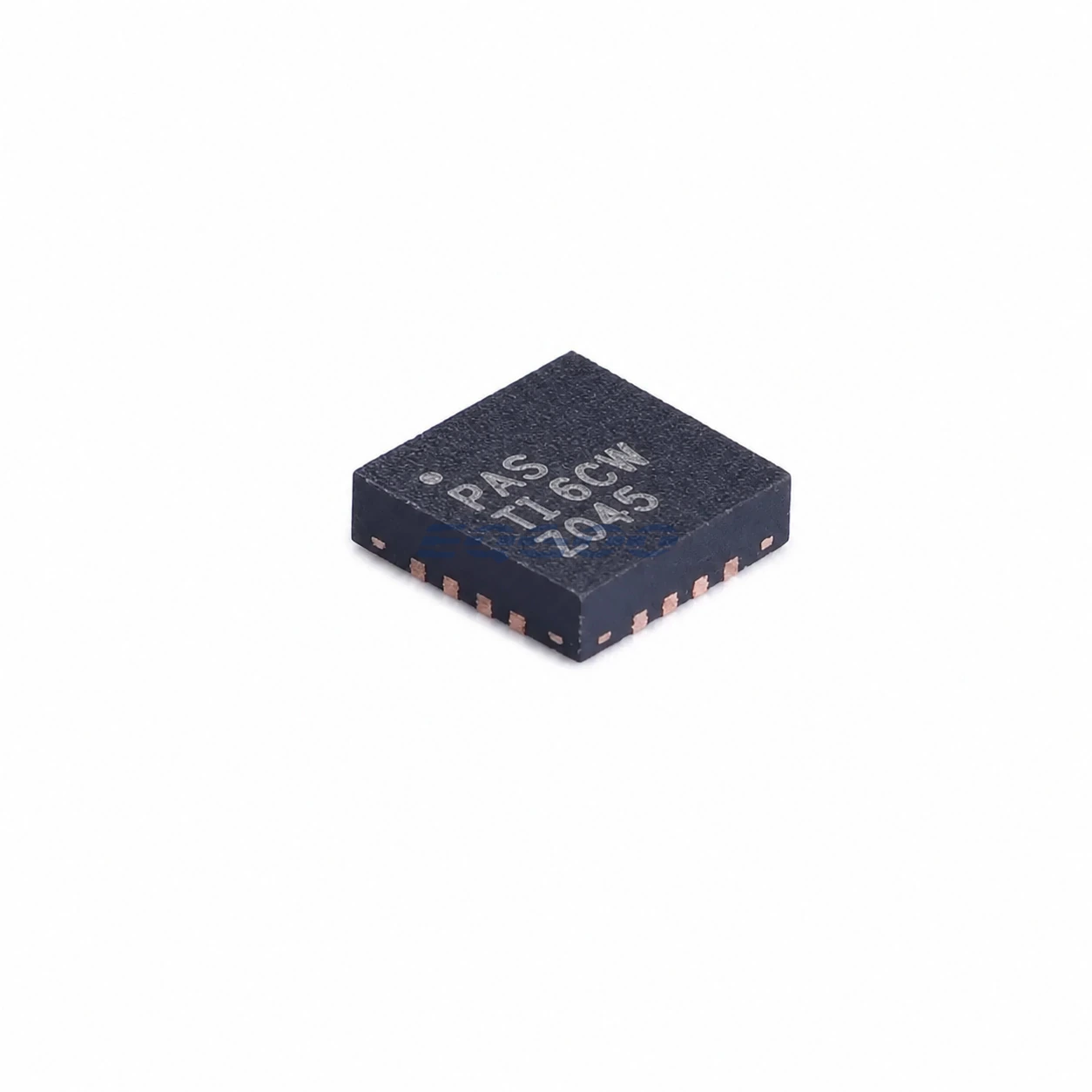

Key Selection Information
| Selection Parameter | Confirmed Information |
|---|---|
| Charger Type | Stand-alone synchronous buck battery-charge controller for solar/current-limited sources |
| Input Range | 5 V to 28 V solar-panel input |
| MPPT Method | Programmable input-voltage regulation through MPPSET |
| Switching Frequency | 600 kHz |
| Battery Chemistries | Li-Ion/Li-Polymer, LiFePO4, and lead-acid supported through programmable regulation |
| Regulation Accuracy | ±0.5% charge voltage; ±3% charge current; ±0.6% input-voltage regulation |
| Power Stage | External high-side/low-side NMOS, inductor, charge-current sense resistor |
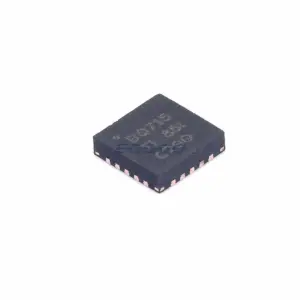
| Exact Package / Packing | VQFN (RVA), 16 pins; 3000-piece large tape and reel |
Product Overview
BQ24650RVAR is a switched-mode battery-charger controller intended for solar panels and other sources whose useful power depends on keeping the input near a chosen operating voltage. Its MPPSET loop reduces battery charge current when panel voltage falls below the programmed point, preventing the charger from pulling the source farther away from the selected maximum-power operating region.
The device implements a constant-input-voltage MPPT method. The MPPSET pin is compared with an internal 1.2 V reference, so an external divider defines the panel voltage that the charger attempts to hold. This is an important selection detail: BQ24650 does not need a processor to perform the input-voltage regulation loop, but the designer must choose an MPPSET voltage appropriate for the actual panel rather than expecting the IC to discover every panel’s optimum voltage automatically.
BQ24650 is also a controller rather than an integrated high-current power stage. It drives external synchronous N-channel MOSFETs at 600 kHz and uses external current-sense and energy-storage components. Battery regulation voltage is resistor-programmable, allowing the charging profile to be adapted to supported Li-based or lead-acid battery systems.
For other charger-controller options, see HKEQGOO’s Battery Chargers category.
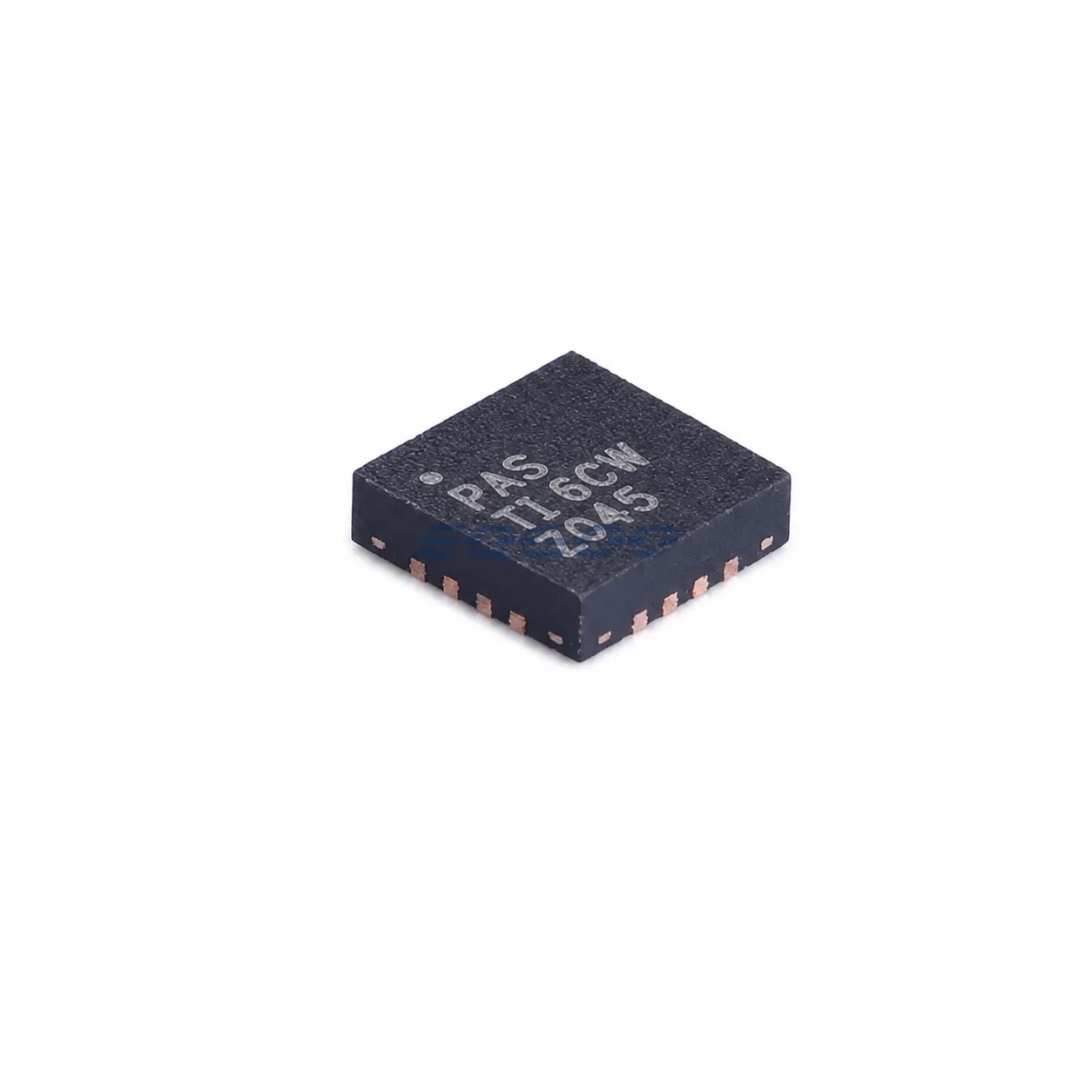
Technical Specifications
| Parameter | Verified Information |
|---|---|
| Manufacturer | Texas Instruments |
| Exact MPN | BQ24650RVAR |
| Topology | 600 kHz synchronous buck charger controller with external NMOS power stage |
| Input Source Range | 5 V to 28 V solar-panel input stated by TI |
| MPPT / Input Regulation | Programmable constant-voltage input regulation using MPPSET |
| MPPSET Comparator Reference | 1.2 V |
| Charge-Voltage Accuracy | ±0.5% stated feature |
| Charge-Current Accuracy | ±3% stated feature |
| Input-Voltage Regulation Accuracy | ±0.6% stated feature |
| Battery Voltage Programming | External divider to VFB; 2.1 V VFB regulation reference |
| Supported Chemistry Examples | Li-Ion/Li-Polymer, LiFePO4, lead acid |
| Battery Temperature Input | TS thermistor qualification input |
| Input Overvoltage Protection | Integrated ACOV protection |
| Off-State Battery Discharge Current | Less than 15 µA stated feature |
| Package | VQFN (RVA), 16 pins |
| Manufacturer Status | Active / Production |
| Part Marking | PAS |
Functional Highlights
MPPT is implemented as a programmable panel-voltage target
A photovoltaic panel’s available current falls when the charger pulls its voltage too low. BQ24650 monitors a divided version of the input voltage at MPPSET. When MPPSET falls below the internal 1.2 V threshold, the charger reduces battery current until the input recovers to the programmed level.
This gives the charger a direct way to protect the solar source from being overdrawn. It also means the selected resistor divider is part of the energy-harvesting design: the programmed voltage should reflect the panel’s intended maximum-power operating point under the conditions the product is designed to encounter.
The MPPT loop deliberately sacrifices charge current when solar power falls
When irradiance decreases or system conditions reduce available panel power, BQ24650 does not try to maintain battery current by collapsing the solar-panel voltage. Instead, the input-voltage loop reduces charge current. Battery charging speed therefore varies with available source power even when the battery-current setting itself has not changed.
That behavior is different from a stiff wall adapter. The maximum programmed battery current defines an upper limit, while the MPPT/input-regulation loop determines how much of that current the panel can actually support at a given time.
Chemistry flexibility comes from external voltage programming, not automatic chemistry detection
The VFB divider sets the battery regulation voltage. This lets the controller be used with several supported chemistry profiles, but it does not identify battery chemistry automatically. The divider, pre-charge/termination settings, thermistor thresholds, and the rest of the charge profile must be designed for the actual pack and battery manufacturer’s requirements.
Design Considerations
- Set MPPSET from the real panel, not a generic solar voltage. The constant-voltage MPPT loop regulates to the external divider target; an unsuitable setpoint leaves available panel energy unused or can operate the panel below its preferred point.
- Expect charge current to change with available solar power. Input-voltage regulation has priority when the panel voltage falls to the programmed threshold.
- Treat the external synchronous buck stage as part of the charger design. MOSFET voltage/current ratings, inductor saturation, switching loss, current-sense resistor loss, and PCB thermal performance determine the practical charge-current capability.
- Program VFB for the exact battery profile. Support for multiple chemistries comes from external regulation settings; a wrong divider can create an incorrect final charge voltage.
- Follow TI’s exposed-pad and switching-loop layout guidance. High di/dt gate-drive, PH-node, current-sense, and ground paths can affect efficiency, regulation accuracy, and EMI if the power layout is poor.
Product Status and Exact Order Code
Manufacturer status: Active / Production
Texas Instruments lists BQ24650RVAR in the 16-pin VQFN RVA package with a 3000-piece large tape-and-reel carrier, Level-2-260C-1 YEAR MSL classification, an operating-temperature listing of −40°C to +85°C, and part marking PAS. BQ24650RVAT is the corresponding 250-piece small tape-and-reel option.
Related Engineering Resources
Quality & Verification Support
Third-party inspection or testing can be arranged according to customer requirements. Testing fees are borne by the buyer. Additional verification requirements can be discussed before shipment. After an order is placed, physical product, label, packaging, and Date Code photos may be provided where appropriate.
Request a Quote
To request a quotation, provide the manufacturer part number, required quantity, destination, target Date Code if applicable, and any testing or inspection requirements.