
Key Selection Information
| Selection Parameter | Confirmed Information |
|---|---|
| Battery Configuration | 1-cell Li-Ion / Li-Polymer, 4.2 V regulation |
| Programmable Fast-Charge Current | 50 mA to 800 mA using the ISET resistor |
| Normal Input Operating Window | 4.45 V to 6.45 V, limited by input DPM and input OVP |
| Charge-Voltage Accuracy | 1% |
| Charge-Current Accuracy | 10% |
| Battery Temperature Monitoring | 10 kΩ NTC input through TS |
| Safety / Thermal Control | Fixed 10-hour safety timer; 125°C thermal regulation |
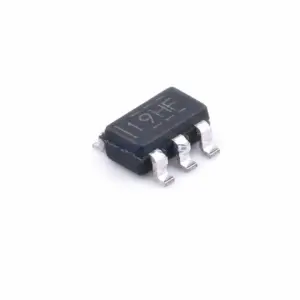
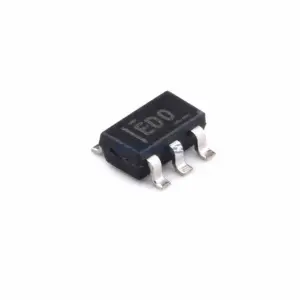
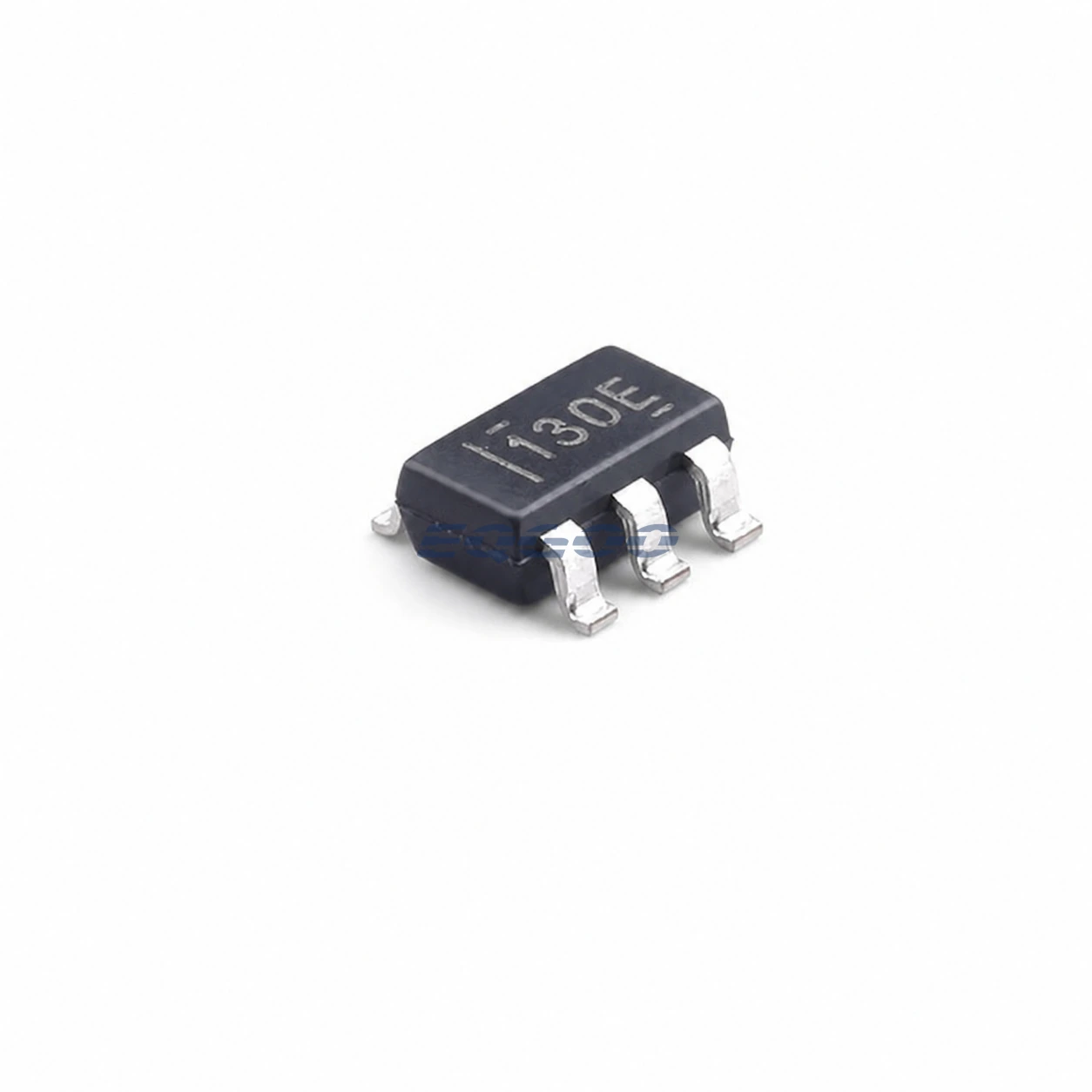
| Exact Package / Packing | SOT-23 (DBV), 6 pins; 3000-piece large tape and reel |
Product Overview
BQ21040DBVR is a Texas Instruments linear charger for a single 4.2 V Li-Ion or Li-Polymer cell. Fast-charge current is set with one external resistor and can be programmed from 50 mA to 800 mA, while the charger integrates charge termination, battery-temperature monitoring, input-voltage protection, thermal regulation, and charge-status indication.
A system load may be connected in parallel with the battery, but BQ21040 does not provide a separate power-path output that independently manages system current. TI notes that the average system load must not prevent the battery from reaching full-charge conditions during the fixed 10-hour safety timer. Designs with a substantial always-on load therefore need to check termination behavior rather than assuming the full programmed current is always available to the battery.
For comparison with other charger architectures, see HKEQGOO’s Battery Chargers category.
Technical Specifications
| Parameter | Verified Information |
|---|---|
| Manufacturer | Texas Instruments |
| Exact MPN | BQ21040DBVR |
| Charger Type | Linear, single-input, single-cell Li-Ion / Li-Polymer charger |
| Battery Regulation Voltage | 4.20 V |
| Fast-Charge Programming Resistor | 0.675 kΩ to 10.8 kΩ recommended operating range |
| Input Voltage Range | 3.5 V to 28 V recommended; normal charging operation is restricted by DPM and OVP to 4.45 V to 6.45 V |
| Input OVP Threshold | 6.5 V minimum, 6.65 V typical, 6.8 V maximum |
| Input Dynamic Power Management Threshold | 4.24 V minimum, 4.30 V typical, 4.46 V maximum under TI’s stated adaptor-mode test condition |
| Pre-Charge Current | 20% of programmed fast-charge current |
| Termination Current | 10% of programmed fast-charge current |
| Low Battery Leakage | 1 µA stated feature |
| Thermal Regulation | 125°C junction-temperature regulation |
| Thermal Shutdown | 150°C stated protection threshold |
| Battery Temperature Input | TS for a 10 kΩ NTC thermistor |
| Package | SOT-23 (DBV), 6 pins |
| Manufacturer Status | Active / Production |
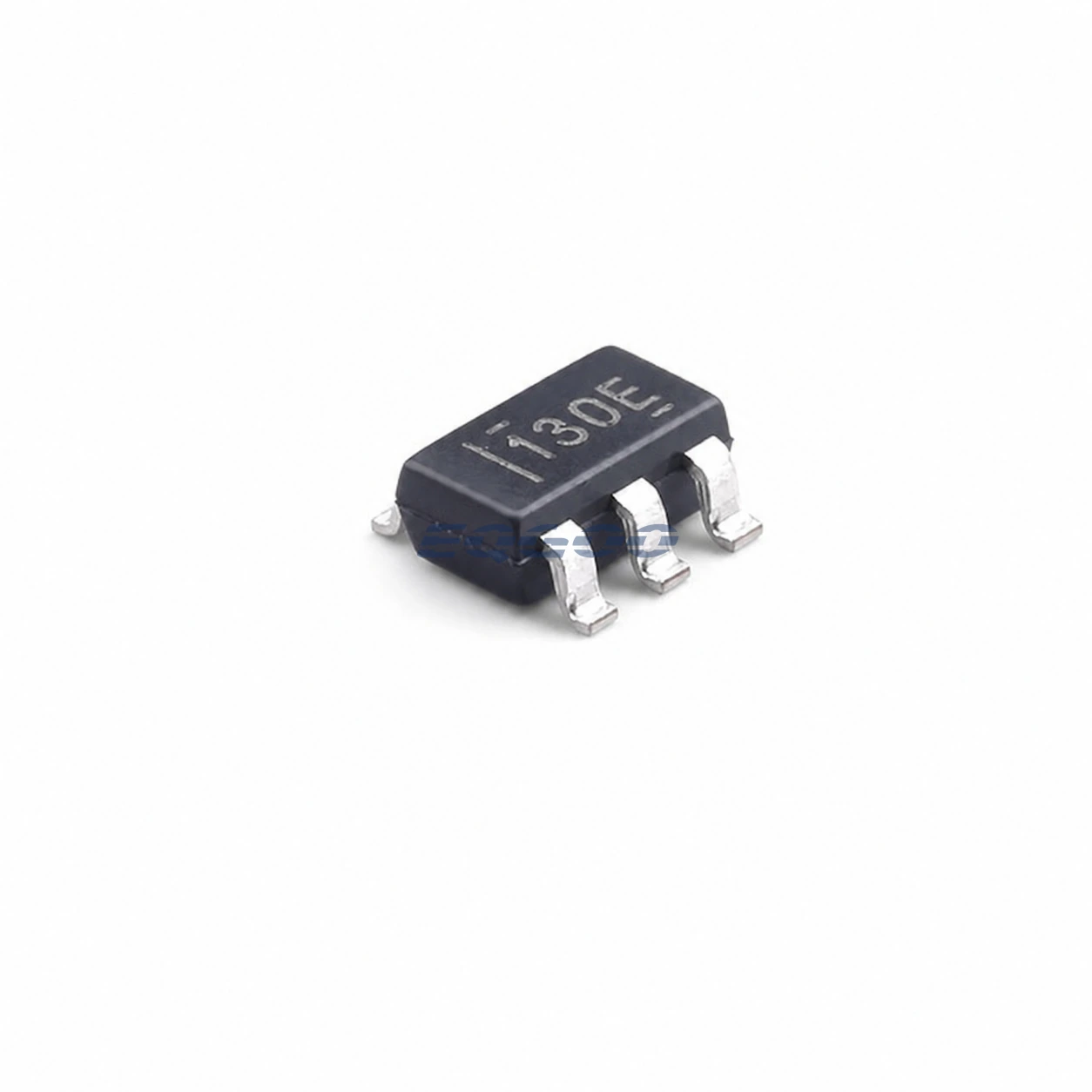
| Part Marking | 130E |
Functional Highlights
System load can change charge completion behavior
BQ21040 has one power output connected to the battery. A system load can share this node, but the charger does not distinguish load current from battery current in the same way as a dedicated power-path charger. If the system continuously draws enough current to keep the battery from reaching the termination condition, the charge cycle can remain active until the safety timer becomes relevant.
This makes average system load an actual selection variable. A low-power handheld load may be compatible with the simple parallel connection, while a system that must operate heavily during charging may benefit from a charger with an explicit power-path architecture.
Input protection does not mean unrestricted charging up to 28 V
The recommended VIN table permits 3.5 V to 28 V at the input pin, but normal charging is bounded by the charger’s input-management thresholds. TI specifies input dynamic power management around 4.3 V and input overvoltage protection around 6.65 V typical.
The 30 V input rating and the wider recommended input-pin range therefore describe tolerance and operating boundaries, not a claim that the charger will regulate a normal 800 mA charge from any voltage in that range. Adapter selection should be based on the normal charging window and the thermal power that must be dissipated in the linear pass element.
Design Considerations
- Program current with RISET and account for fixed pre-charge/termination ratios. The fast-charge setting follows TI’s ISET relationship; pre-charge is 20% and termination is 10% of the programmed fast-charge current.
- Check linear-charger dissipation at the intended input voltage. Power converted to heat rises with the difference between VIN and battery voltage multiplied by charge current. The internal thermal loop reduces charge current around the 125°C regulation threshold, so an 800 mA programmed value does not guarantee 800 mA under thermally constrained conditions.
- Treat the system load as part of charge-termination analysis. A load connected at OUT can delay or prevent normal termination if it keeps current above the termination threshold.
- Use the TS pin deliberately. A 10 kΩ NTC supports battery-temperature monitoring. TI also documents specific fixed-resistor behavior when temperature sensing is intentionally disabled; do not leave the pin behavior undefined.
- Use input and output bypass capacitors close to the device and rate the input capacitor for possible adapter transients. TI recommends evaluating capacitance under the actual system’s pulsed-load and source conditions.
Product Status and Exact Order Code
Manufacturer status: Active / Production
Texas Instruments lists BQ21040DBVR in the 6-pin SOT-23 DBV package with a 3000-piece large tape-and-reel carrier, Level-1-260C-UNLIM MSL rating, and part marking 130E. The related BQ21040DBVT uses the same DBV package but is supplied as a 250-piece small tape-and-reel option. The R-versus-T order-code difference should therefore be retained in purchasing records and RFQs.
Related Engineering Resources
Quality & Verification Support
Third-party inspection or testing can be arranged according to customer requirements. Testing fees are borne by the buyer. Additional verification requirements can be discussed before shipment. After an order is placed, physical product, label, packaging, and Date Code photos may be provided where appropriate.
Request a Quote
To request a quotation, provide the manufacturer part number, required quantity, destination, target Date Code if applicable, and any testing or inspection requirements.