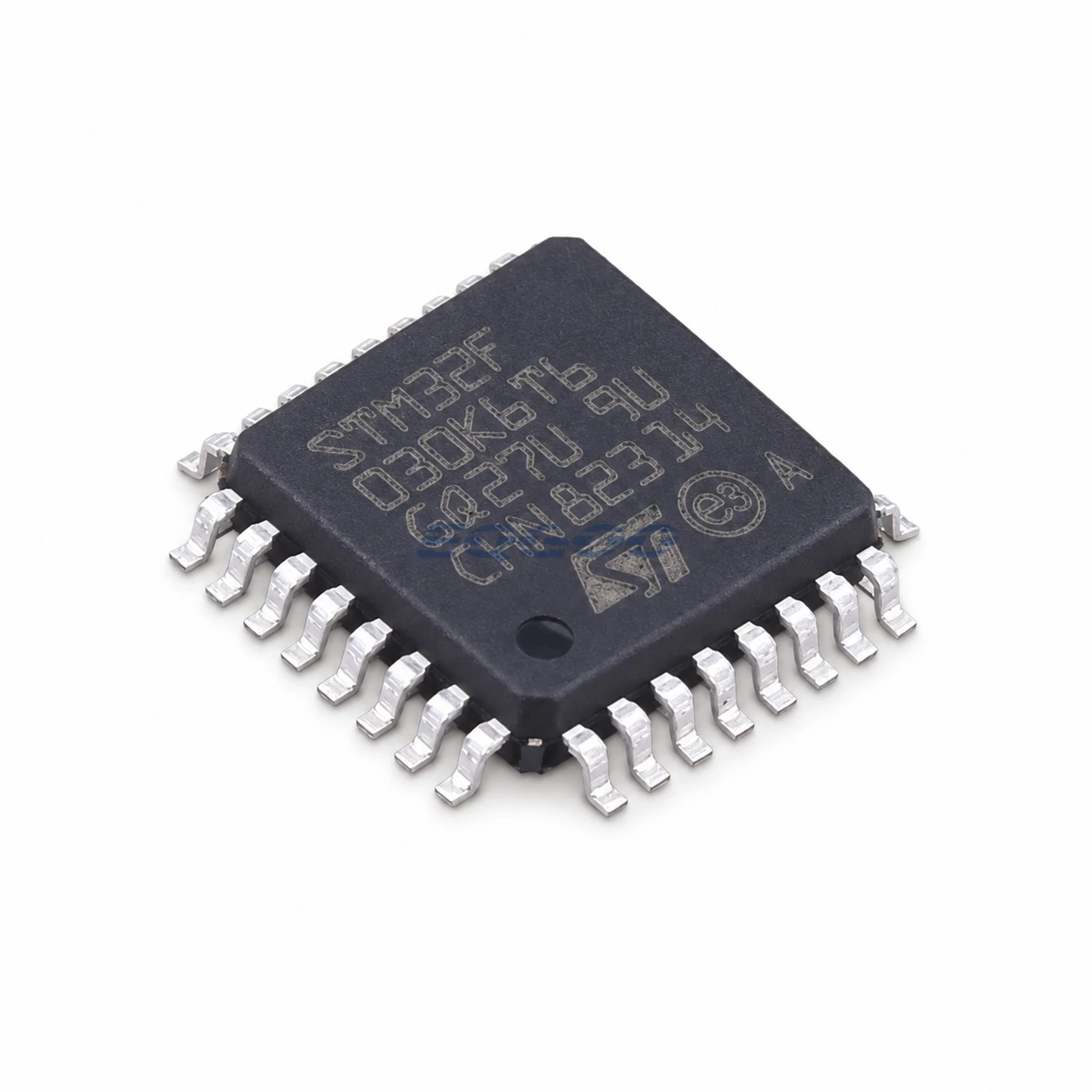
Key Selection Information
| Selection Parameter | Confirmed Information |
|---|---|
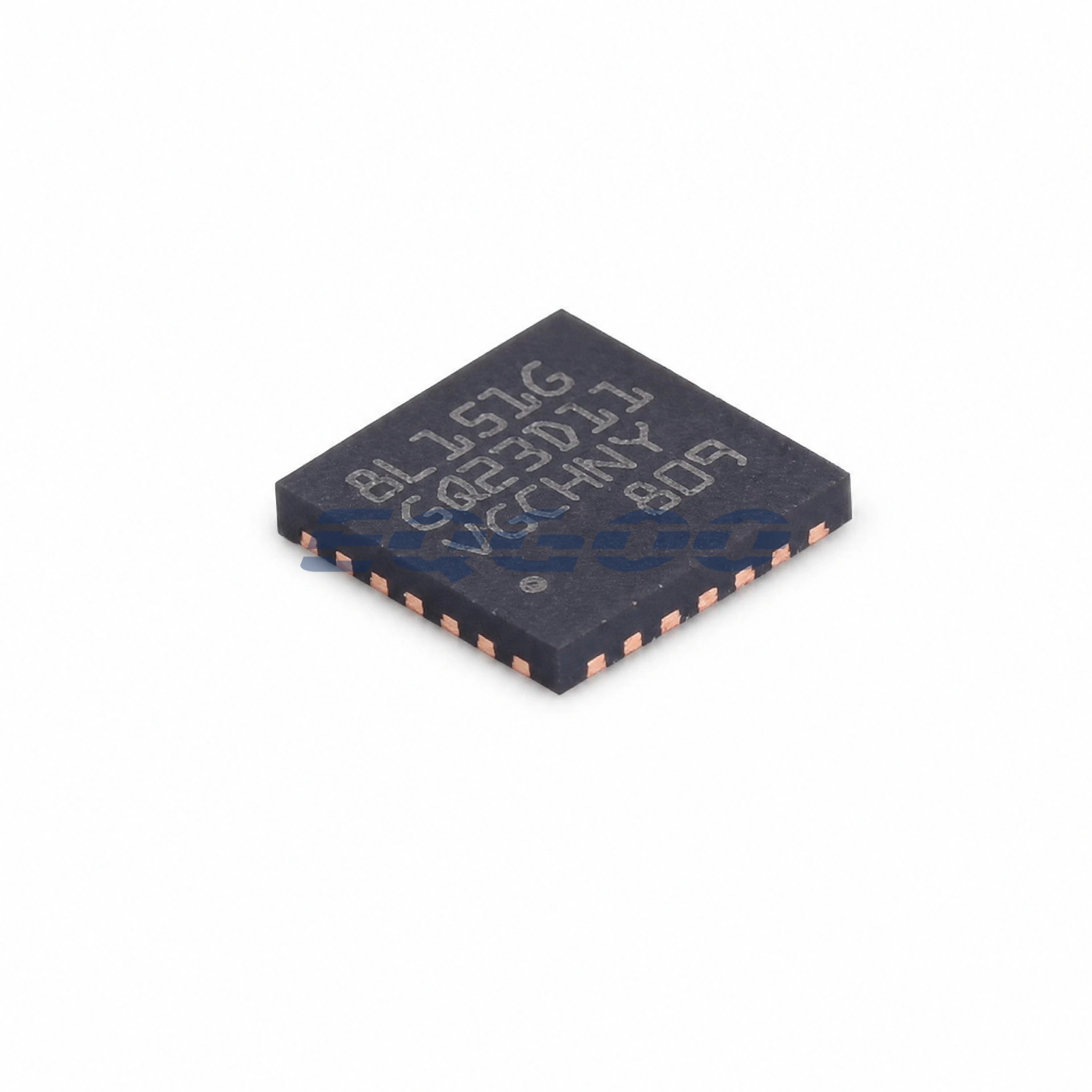
| Package | LQFP-32(7×7) |
| Supply voltage | 2.4V~3.6V |
| CPU Core | ARM Cortex-M0 |
| Maximum CPU speed | 48MHz |
| Program memory | 32KB |
| Operating Temperature | -40℃~+85℃ |
| Number of I/O | 25 |
Middle-size STM32F030 option
STM32F030K6T6 sits between the smallest TSSOP-20 STM32F030 parts and the 48-pin C8 variants. It provides 32 KB of Flash, a 48 MHz Cortex-M0 core and an LQFP-32 package; ST lists the T6 orderable as active, industrial grade and specified for a 2.4 V to 3.6 V supply.
The exact product table gives this configuration 25 I/Os, one SPI, one USART and ten ADC channels. That combination is useful when 20 pins are too restrictive but a 48-pin footprint and 64 KB of Flash are unnecessary.
Technical Specifications
| Parameter | Value |
|---|---|
| Package | LQFP-32(7×7) |
| Supply voltage | 2.4V~3.6V |
| CPU Core | ARM Cortex-M0 |
| Maximum CPU speed | 48MHz |
| Program memory | 32KB |
| Operating Temperature | -40℃~+85℃ |
| Number of I/O | 25 |
| ADC (Bit) | 12bit |
| Program Memory Type | FLASH |
| Core Size | 32 Bit |
| Oscillator Type | Built-in |
The K6 trade-off: footprint versus headroom
The K6T6 is mainly a footprint and resource trade-off. It doubles the Flash of the F4 device to 32 KB and exposes more I/O through LQFP-32, but it still has a smaller serial-interface and memory budget than the C8T6. This makes it a deliberate middle step rather than an interchangeable F030 suffix.
Selection checkpoints
Use 25 I/Os as the package-level ceiling, then subtract pins reserved by clocking, reset, debug and analog functions. One SPI and one USART are available on the exact device, so applications needing several simultaneous serial links should be evaluated against a larger F030 variant before layout.
Where K6T6 is a sensible fit
This device fits compact controllers that need moderate GPIO, basic analog acquisition and about 32 KB of program storage without the board area of a 48-pin MCU. It is particularly useful when the design has already proven that one SPI and one USART are enough.
Keep expansion margin visible
The main risk with this orderable is resource creep: extra firmware, a second serial link or additional GPIO can quickly erase the reason for choosing the 32-pin part. Confirm final firmware size and pin multiplexing early, and keep the 2.4 V to 3.6 V supply requirement in the same power-domain review as the attached sensors and interfaces.
Related Engineering Resources
- STM32F030K6T6 Datasheet (PDF) — HKEQGOO-hosted copy of the STMicroelectronics datasheet used for technical review.
- STMicroelectronics product page — official manufacturer product, lifecycle, ordering and documentation resource.
Quality & Verification Support
Third-party inspection or testing can be arranged according to customer requirements. Testing fees are borne by the buyer. Additional verification requirements can be discussed before shipment. After an order is placed, physical product, label, packaging, and Date Code photos may be provided where appropriate.
Request a Quote
To request a quotation, provide the manufacturer part number, required quantity, destination, target Date Code if applicable, and any testing or inspection requirements.
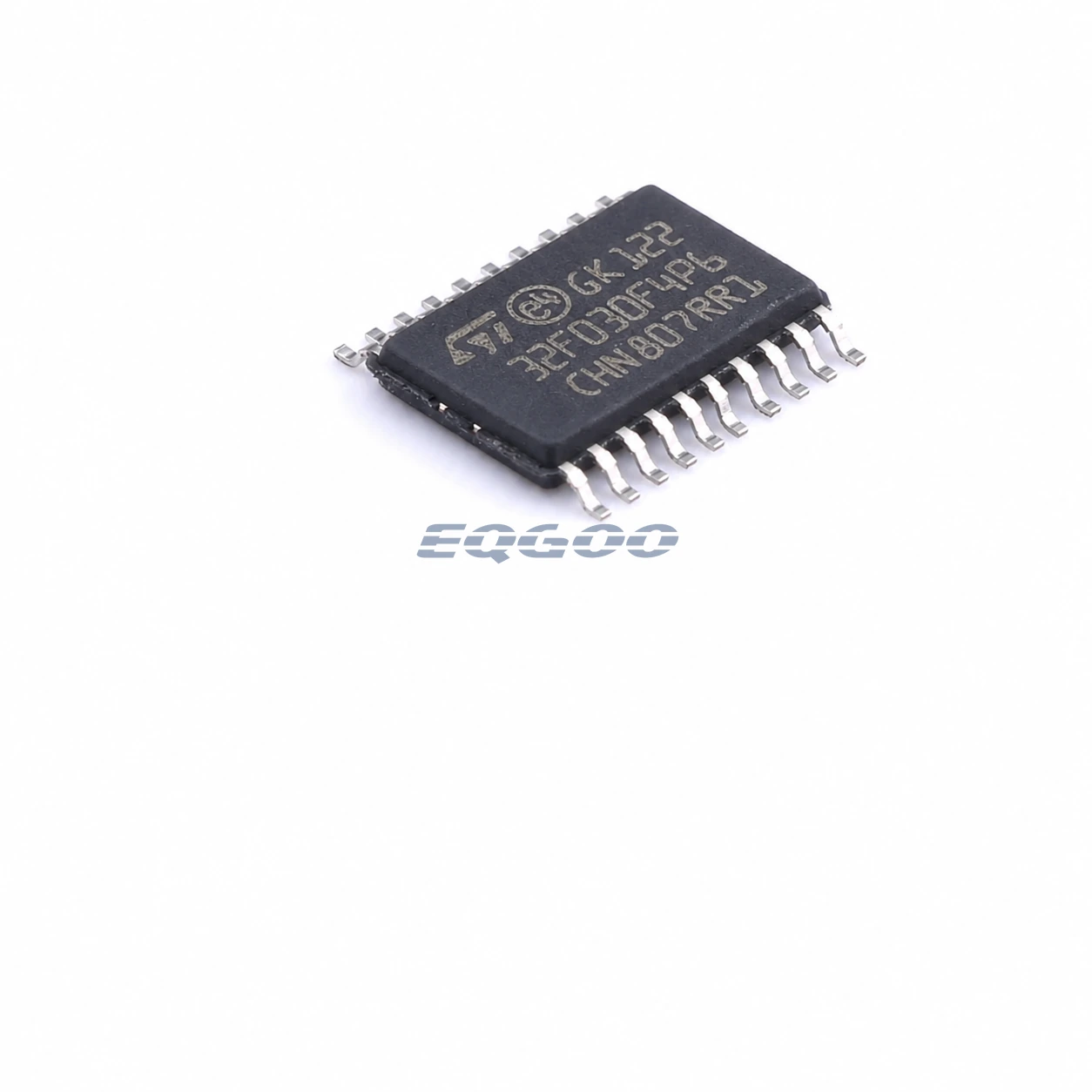
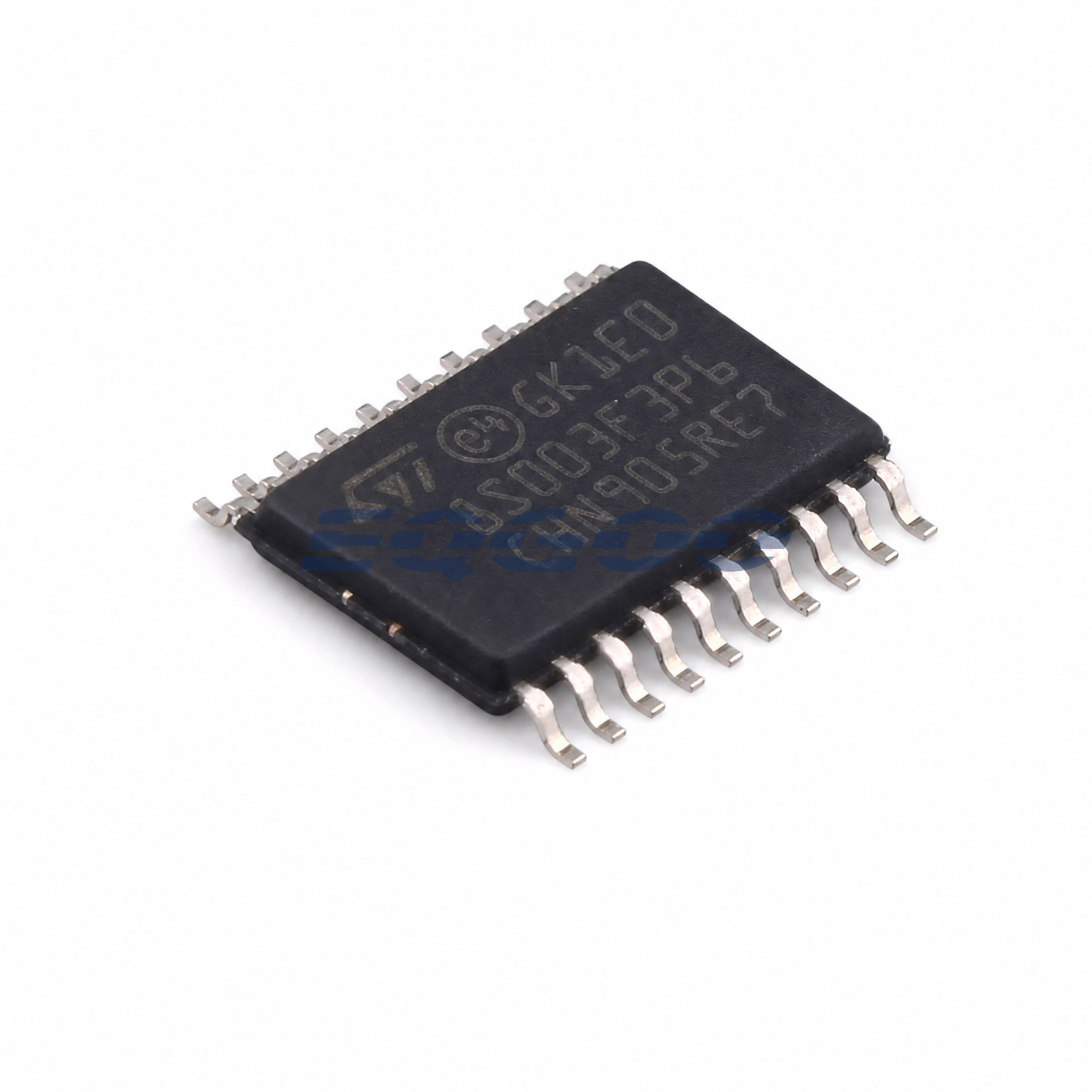
For a smaller 16-KB Flash, TSSOP-20 design in the STM32F030 family, compare STM32F030F4P6TR. For a 64-KB Flash option with more package pins, review STM32F030C8T6 in LQFP-48. This STM32F030K6T6 is the 32-KB LQFP-32 version; these are engineering selection comparisons rather than interchangeable board footprints, so check firmware image size, I/O mapping and pinout.