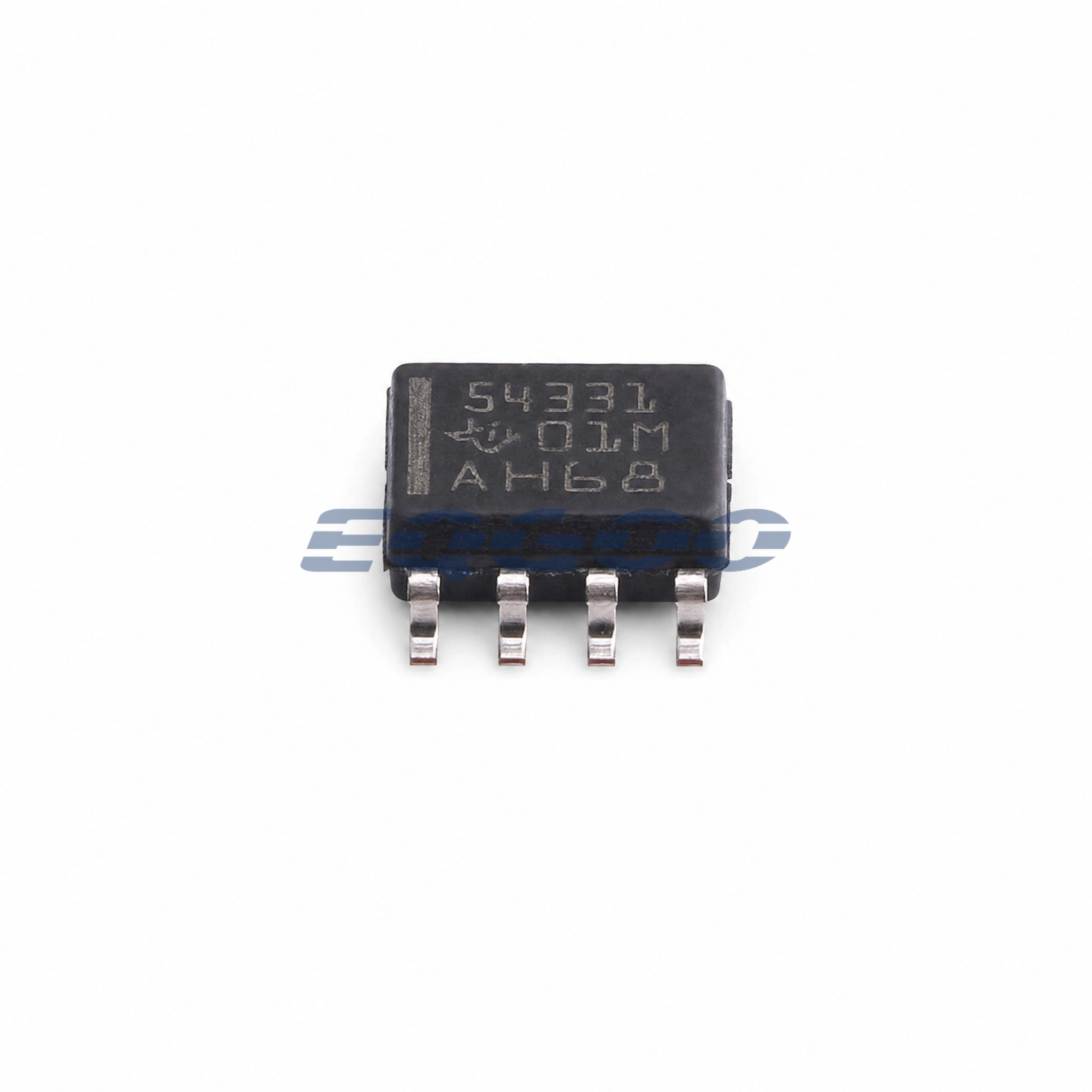
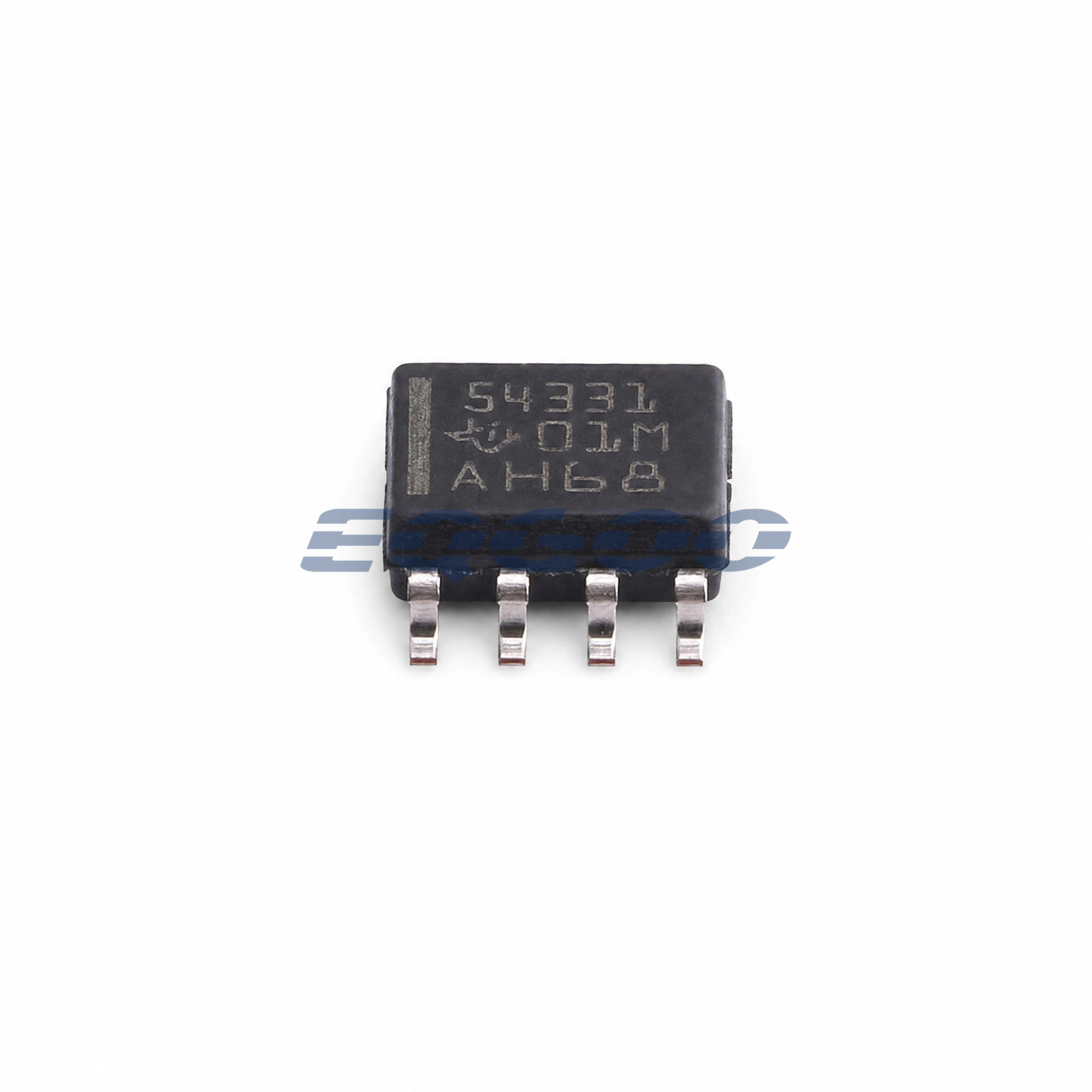
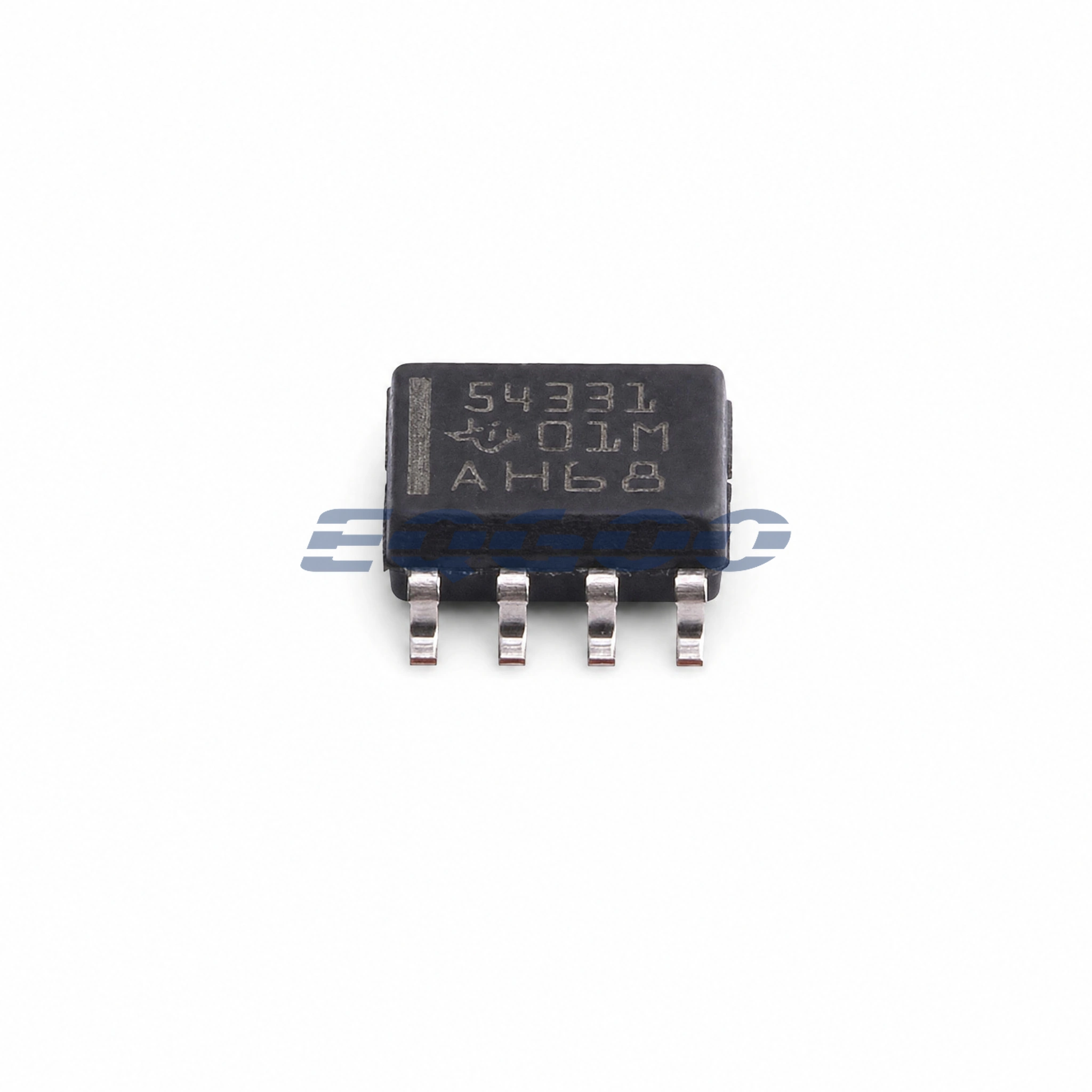

Key Selection Information
| Selection Parameter | Confirmed Information |
|---|---|
| Manufacturer | Texas Instruments |
| Manufacturer Part Number | TPS54331DR |
| Manufacturer Status | ACTIVE |
| Topology | Buck / step-down converter |
| Input Voltage Range | 3.5 V to 28 V |
| Output Voltage Range | 0.8 V to 25 V, adjustable |
| Output Current | Up to 3 A continuous |
| Switching Frequency | 570 kHz fixed |
| Control Mode | Current mode |
| Typical Operating Quiescent Current | 110 µA |
| Typical Shutdown Quiescent Current | 1 µA |
| Light-Load Mode | Pulse-skipping Eco-mode |
| Maximum Duty Cycle | 90% |
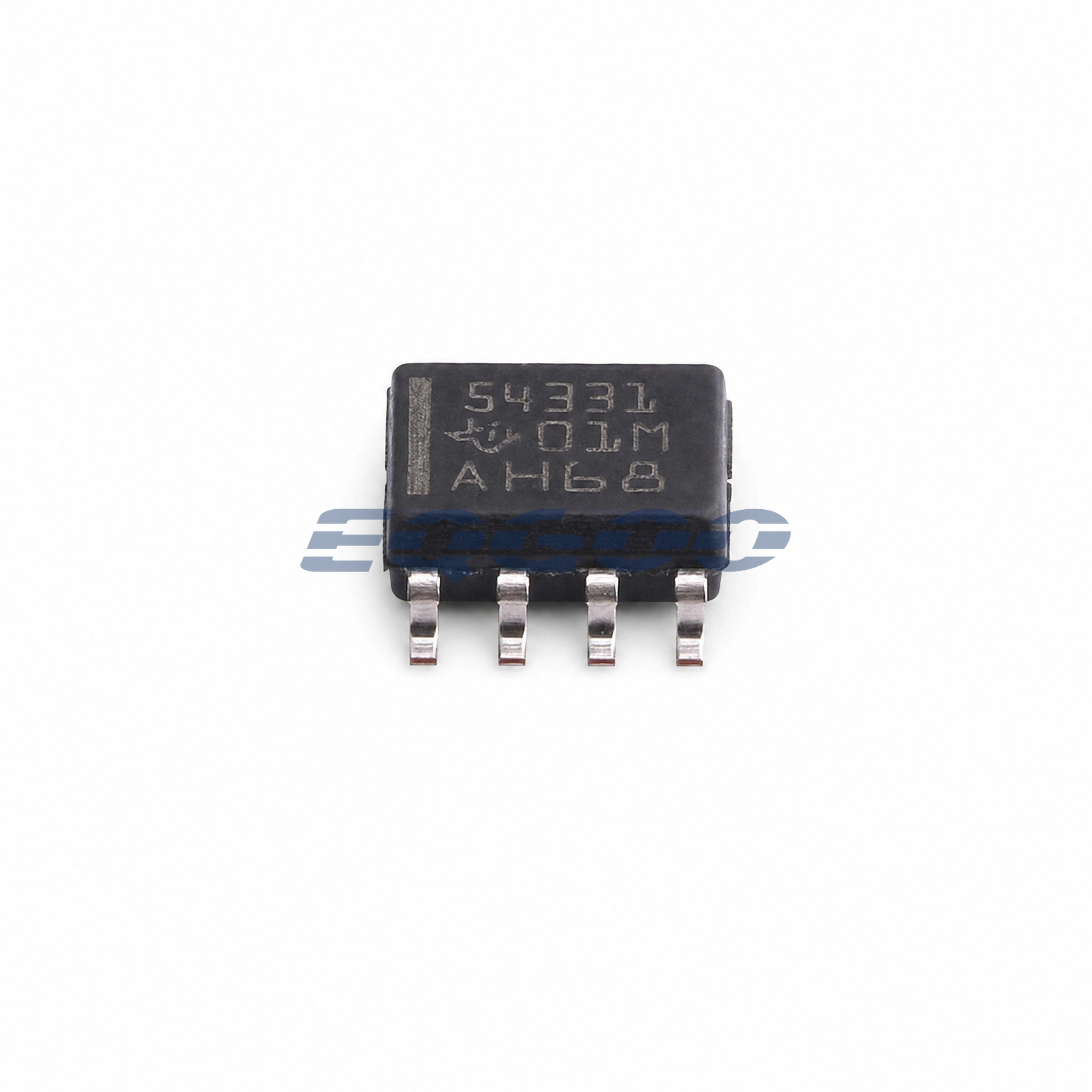
| Package | SOIC-8 (D) |
| Packing | 2,500 units, large tape and reel |
| Operating Temperature Range | -40 °C to +150 °C |
Product Overview
The Texas Instruments TPS54331DR is a 3 A step-down DC/DC converter for input rails from 3.5 V to 28 V. It integrates an 80 mΩ high-side MOSFET, operates at a fixed 570 kHz switching frequency, and regulates an adjustable output from 0.8 V up to 25 V within the converter’s duty-cycle and operating limits.
The device uses current-mode control and includes adjustable slow start, a programmable undervoltage-lockout threshold, pulse-skipping Eco-mode for improved light-load efficiency, cycle-by-cycle current limiting, frequency foldback, thermal shutdown, and output overvoltage transient protection. The exact TPS54331DR ordering code is supplied in an 8-pin SOIC package on a 2,500-unit large tape-and-reel carrier.
Key Features
- 3.5 V to 28 V operating input range.
- Adjustable output voltage from 0.8 V to 25 V.
- Up to 3 A continuous output current.
- Integrated 80 mΩ high-side MOSFET.
- Fixed 570 kHz switching frequency.
- Pulse-skipping Eco-mode for improved light-load efficiency.
- 110 µA typical operating quiescent current.
- 1 µA typical shutdown quiescent current.
- Adjustable slow start to limit inrush current.
- Programmable UVLO threshold.
- Cycle-by-cycle current limit, frequency foldback, thermal shutdown, and overvoltage transient protection.
Technical Specifications
| Group | Parameter | Value |
|---|---|---|
| Power | Topology | Buck / step-down |
| Power | Input voltage | 3.5 V to 28 V |
| Power | Output voltage | 0.8 V to 25 V, adjustable |
| Power | Maximum continuous output current | 3 A |
| Switching | Frequency | 570 kHz fixed |
| Control | Control mode | Current mode |
| Control | Maximum duty cycle | 90% |
| Quiescent | Operating Iq | 110 µA typical |
| Quiescent | Shutdown Iq | 1 µA typical |
| Protection | Current limit | Cycle-by-cycle |
| Protection | Frequency foldback | Yes |
| Protection | Thermal shutdown | Yes |
| Protection | Overvoltage transient protection | Yes |
| Startup | Slow start | Adjustable |
| Input | UVLO | Programmable threshold |
| Package | Type | SOIC-8 (D) |
| Package | Carrier | 2,500-unit large tape and reel |
| Operating | Temperature | -40 °C to +150 °C |
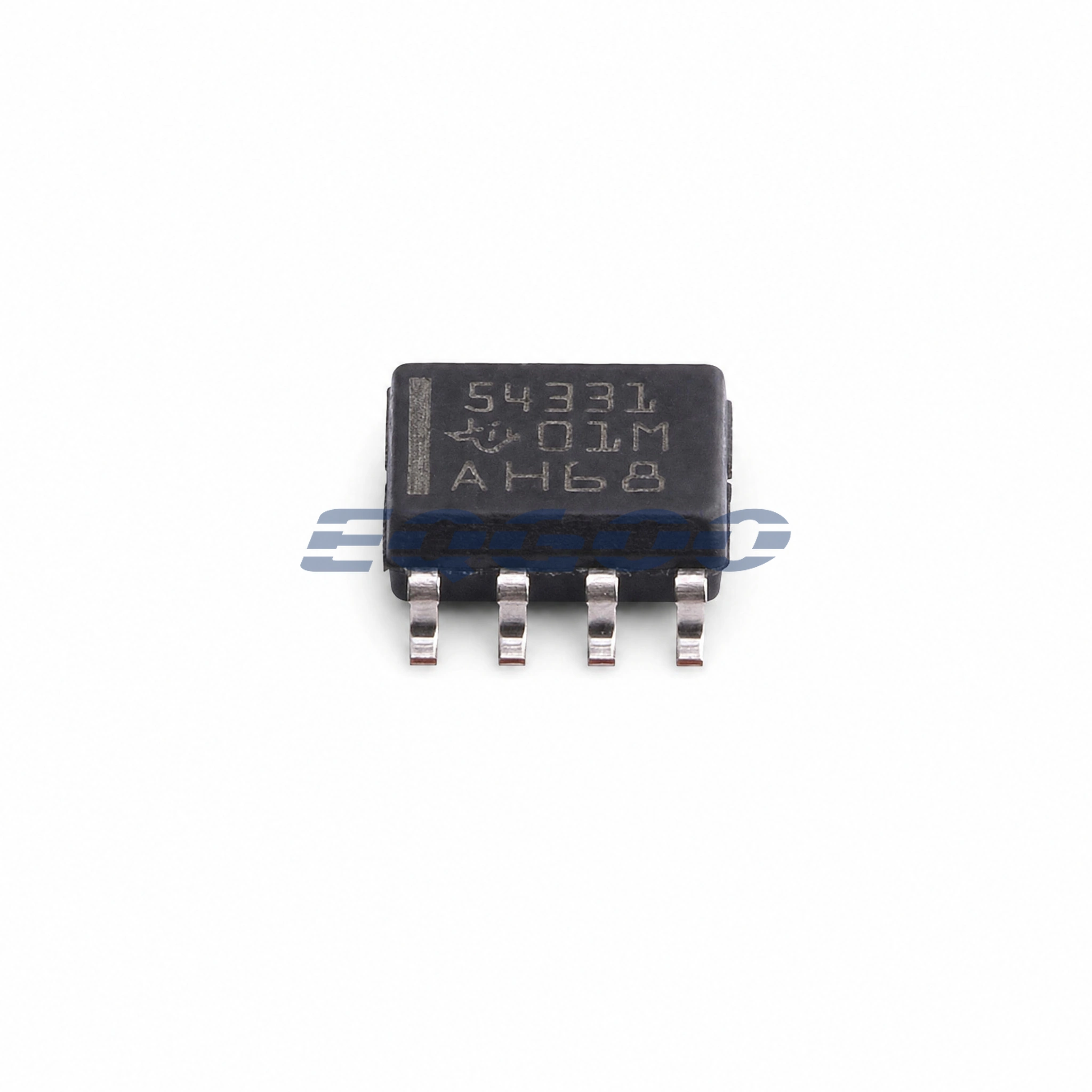
Product Status
| Item | Information |
|---|---|
| Manufacturer Status | ACTIVE |
Texas Instruments currently lists TPS54331DR as an active production orderable part.
Functional Highlights
Wide-input conversion from common intermediate rails
The 3.5 V to 28 V input range allows one converter family to operate from common 5 V, 12 V, and 24 V-class sources, provided the actual source tolerance and transient limits remain inside the device’s electrical ratings. This is useful in systems that generate lower local rails from an intermediate bus.
Integrated high-side switch with external catch diode
TPS54331 is a non-synchronous buck converter. The high-side MOSFET is integrated, while the low-side current path uses an external catch diode. Selection of that diode affects conduction loss, reverse-voltage margin, thermal performance, and switching behavior.
Eco-mode improves light-load behavior
At light load, the device uses pulse-skipping Eco-mode to reduce unnecessary switching activity. This can improve efficiency on rails that spend long periods at low current, without requiring firmware control of the power stage.
Adjustable UVLO and slow start support controlled power sequencing
The enable / UVLO network can be configured so the converter starts only after the source reaches the intended threshold, while the slow-start capacitor controls how quickly the output rises. These functions are useful where inrush current and source brownout behavior must be managed deliberately.
Applications / Application Fit
TPS54331DR can be considered for local step-down power rails where the design requires up to 3 A from an input within 3.5 V to 28 V and where a non-synchronous architecture is acceptable.
Typical engineering fits include:
- point-of-load conversion from 12 V or 24 V-class intermediate buses;
- 5 V, 3.3 V, and other lower rails for controllers, sensors, interfaces, and mixed-signal circuitry;
- equipment that benefits from improved light-load efficiency through Eco-mode;
- systems that need programmable undervoltage startup behavior and controlled output ramping.
The device should not be selected by current rating alone. Maximum ambient temperature, input/output ratio, switching loss, catch-diode loss, inductor loss, PCB copper area, and airflow all affect the practical continuous-load capability.
Why Choose This Part
TPS54331DR is a practical fit when a design needs a 28 V-capable, 3 A adjustable buck converter in a standard SOIC-8 package and does not require a synchronous rectifier. Its main selection advantages are the wide input range, integrated high-side MOSFET, fixed-frequency operation, programmable UVLO, adjustable slow start, and Eco-mode light-load behavior.
For a new design, TI’s current product page also points designers to TPS62933 when a similar 30 V-class converter with higher switching frequency, lower quiescent current, and improved EMI characteristics is preferred. That is a migration option to evaluate, not an automatic replacement claim.
Design Considerations
Catch diode selection: Because the converter is non-synchronous, the external Schottky or other suitable catch diode must be rated for the application’s reverse voltage, forward current, thermal load, and switching conditions.
Thermal design: A 3 A electrical rating does not mean every VIN/VOUT combination can deliver 3 A at every ambient temperature. Estimate loss in the internal MOSFET, catch diode, inductor, and surrounding copper, then verify junction temperature against the TI thermal data.
Feedback divider: The output is set from the 0.8 V reference using an external resistor divider. Divider values should follow TI’s datasheet guidance so bias current and noise do not introduce avoidable regulation error.
Compensation network: TPS54331 uses external loop compensation. The compensation components must be selected together with the inductor and output capacitor values using TI’s design procedure or WEBENCH rather than copied blindly from a different output condition.
Slow start: The external slow-start capacitor controls output ramp time. A slower ramp reduces startup stress and inrush but increases the time required to reach regulation.
Input margin: The 28 V input figure is the upper operating limit, not a target for repetitive overshoot. Input-source tolerance and switching transients should remain within the device limits with appropriate design margin.
Related Engineering Resources
- Texas Instruments TPS54331 product page — official product status, parametric data, datasheet, and design resources.
- Texas Instruments TPS54331DR part details — exact ordering-code package, carrier, quality, and lifecycle information.
- WEBENCH Power Designer — TI design tool for component selection and power-stage evaluation.
FAQ
What input voltage range does TPS54331DR support?
The recommended operating input range is 3.5 V to 28 V.
What output current can it provide?
TI specifies up to 3 A continuous output current. Practical continuous current still depends on the converter losses and thermal conditions of the actual design.
Does TPS54331DR need an external catch diode?
Yes. It is a non-synchronous buck converter, so the low-side current path uses an external diode.
What is the switching frequency?
The device operates at a fixed 570 kHz switching frequency.
What is Eco-mode?
Eco-mode is TI’s pulse-skipping light-load operating behavior used to improve efficiency when the output current is low.
What does the DR suffix identify?
The exact TPS54331DR orderable code uses the 8-pin D-package SOIC and is supplied in a 2,500-unit large tape-and-reel carrier.
Quality & Verification Support
Third-party inspection or testing can be arranged according to customer requirements. Testing fees are borne by the buyer. Additional verification requirements can be discussed before shipment. After an order is placed, physical product, label, packaging, and Date Code photos may be provided where appropriate.
Request a Quote
To request a quotation, provide the manufacturer part number, required quantity, destination, target Date Code if applicable, and any testing or inspection requirements.