
Key Selection Information
| Selection Parameter | Confirmed Information |
|---|---|
| Application | Dedicated delta-sigma front end for bridge sensors |
| Resolution | 24-bit output; 19.2-bit noise-free stated at gain 64 |
| Inputs | 2 differential channels plus internal temperature sensor |
| PGA | Gain 1, 2, 64 or 128 |
| Data Rate | 10 SPS or 80 SPS |
| Noise | 17 nV RMS stated at 10 SPS, gain 128 |
| Reference | External reference supports ratiometric bridge measurement |
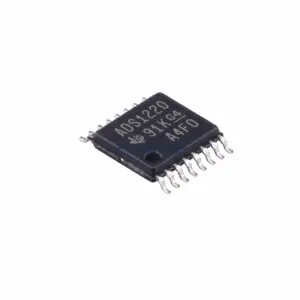
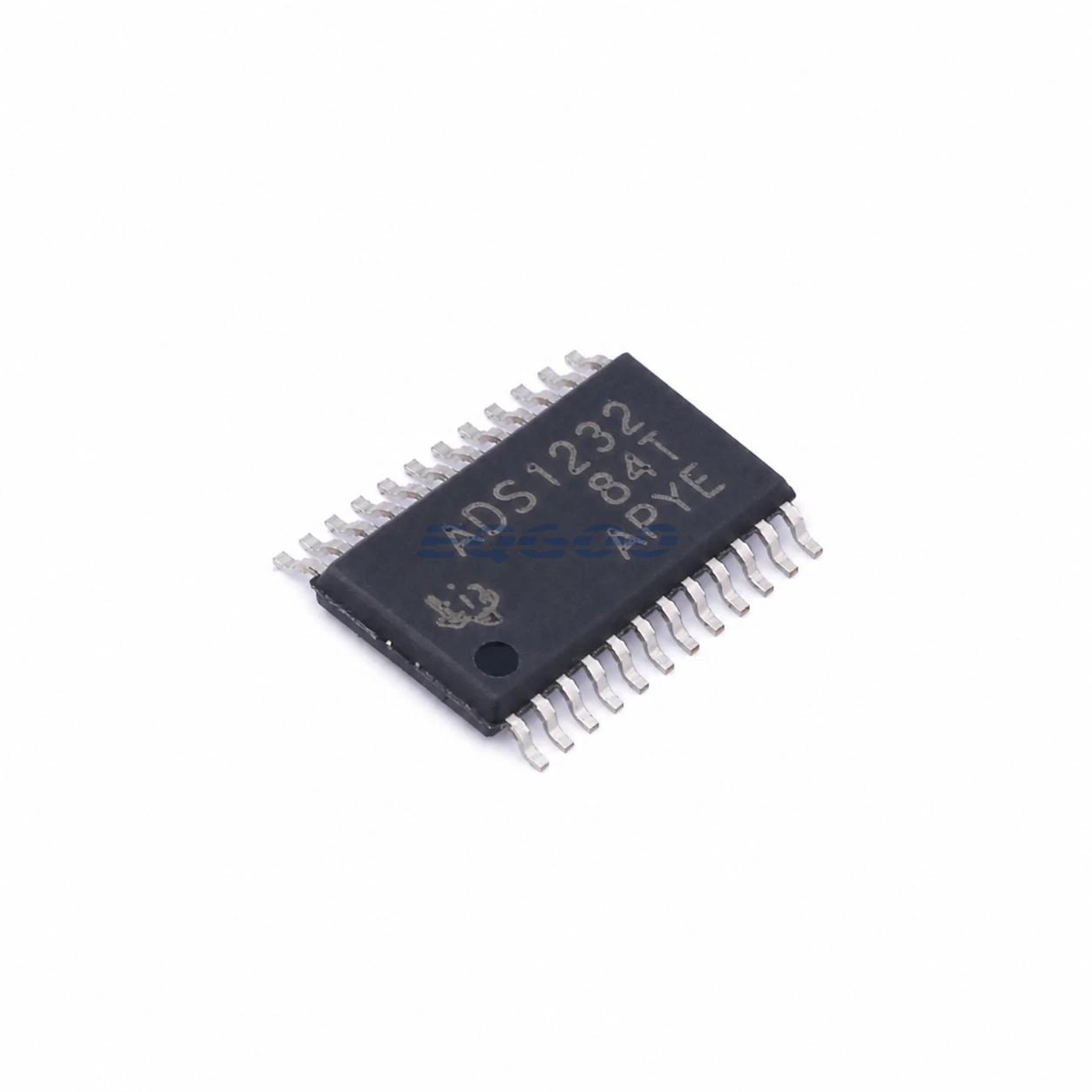
| Exact Package / Packing | TSSOP (PW), 24 pins; 2000-piece large reel; marking ADS1232 |
Product Overview
ADS1232IPWR is purpose-built for load cells, pressure bridges and weigh-scale signals. It combines a very-low-noise PGA with a 24-bit delta-sigma ADC and only the data rates needed for slow mechanical sensors.
At gain 128 and 10 SPS, TI specifies 17 nV RMS input-referred noise and strong simultaneous 50/60-Hz rejection. This is more relevant to weigh-scale resolution than the raw 24-bit code width.
An external reference lets the converter operate ratiometrically from the same bridge excitation voltage, reducing gain error caused by excitation-supply drift. The two differential channels support a main bridge plus a second bridge/sensor path.
For related devices, see HKEQGOO’s ADCs category.
Technical Specifications
| Parameter | Verified Information |
|---|---|
| Manufacturer | Texas Instruments |
| Exact MPN | ADS1232IPWR |
| Application | Dedicated delta-sigma front end for bridge sensors |
| Resolution | 24-bit output; 19.2-bit noise-free stated at gain 64 |
| Inputs | 2 differential channels plus internal temperature sensor |
| PGA | Gain 1, 2, 64 or 128 |
| Data Rate | 10 SPS or 80 SPS |
| Noise | 17 nV RMS stated at 10 SPS, gain 128 |
| Reference | External reference supports ratiometric bridge measurement |
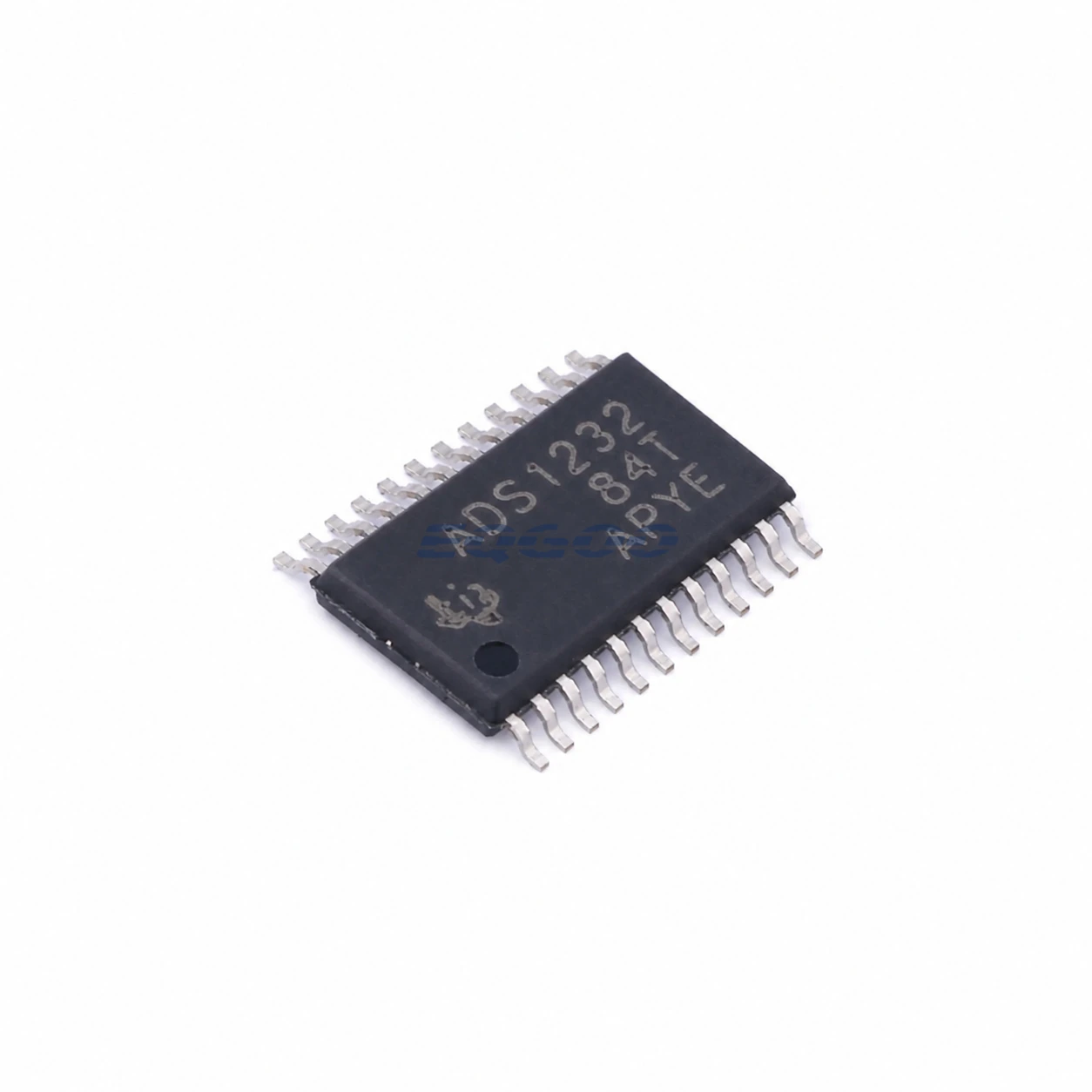
| Exact Package / Packing | TSSOP (PW), 24 pins; 2000-piece large reel; marking ADS1232 |
| Manufacturer Status | Active / Production |
| Part Marking | ADS1232 |
Functional Highlights
Bridge-specific noise performance is the central selection metric
Gain-128 input noise and mains rejection directly determine how many stable load-cell counts can be extracted from a millivolt-scale bridge signal.
Ratiometric reference cancels bridge-excitation changes
Driving the reference from the bridge excitation makes the output depend mainly on bridge ratio rather than the absolute excitation voltage.
Design Considerations
- Place bridge/reference routing symmetrically and keep excitation return currents out of the low-level input path.
- Choose 10 SPS when noise/mains rejection is more important than dynamic response; 80 SPS when response time matters.
- Budget load-cell thermal drift and mechanical creep separately from ADC noise.
Product Status and Exact Order Code
Manufacturer status: Active / Production
Texas Instruments lists ADS1232IPWR as Active / Production; TSSOP (PW), 24 pins; 2000-piece large tape and reel; −40°C to +105°C; marking ADS1232.
Related Engineering Resources
Quality & Verification Support
Third-party inspection or testing can be arranged according to customer requirements. Testing fees are borne by the buyer. Additional verification requirements can be discussed before shipment. After an order is placed, physical product, label, packaging, and Date Code photos may be provided where appropriate.
Request a Quote
To request a quotation, provide the manufacturer part number, required quantity, destination, target Date Code if applicable, and any testing or inspection requirements.