
Key Selection Information
| Selection Parameter | Confirmed Information |
|---|---|
| Battery Configuration | Single rechargeable Li-based cell |
| Gauging Method | Compensated End-of-Discharge Voltage (CEDV) |
| Sense Element | External 10 mΩ, 1% current-sense resistor; device pre-calibrated for this value |
| Host Interface | I²C up to 400 kHz |
| Configuration | Preloaded CEDV parameters or custom chemistry parameters in RAM / OTP |
| Power Consumption | 50 µA NORMAL, 9 µA SLEEP stated features |
| Deployment | Pack-side or system-board implementation |
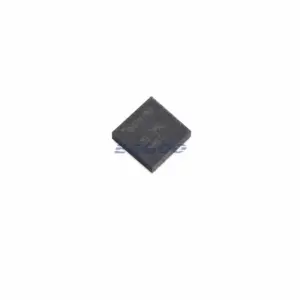
| Exact Package / Packing | DSBGA (YZF), 9 balls; 3000-piece large tape and reel |
Product Overview
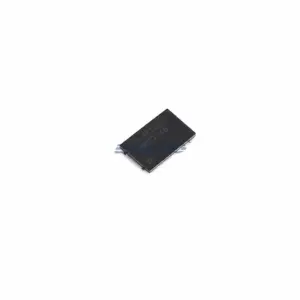
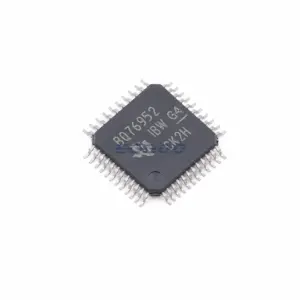
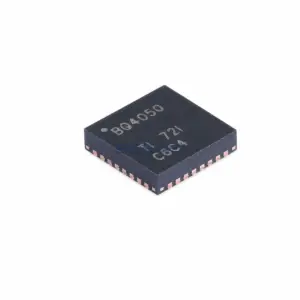
BQ27220YZFR is a compact single-cell fuel gauge based on TI’s CEDV algorithm. It estimates remaining capacity and state of charge by combining coulomb-counted current with battery voltage, temperature, discharge-rate behavior, and a cell model used near end of discharge. The device is aimed at designs that want a small gauge footprint and a relatively direct chemistry-parameter workflow.
A key selection point is its 10 mΩ external sense-resistor assumption. TI pre-calibrates the gauge for a standard 10 mΩ, 1% resistor, so the current-measurement path is not just a generic low-value shunt connection. Kelvin routing and resistor tolerance directly affect the coulomb-counting signal used by the CEDV model.
The gauge can reside in the battery pack or on the system board. That flexibility changes PACK+, PACK−, SRP and SRN routing and the way removable versus embedded batteries are connected, so the physical implementation needs to match the chosen topology.
For related devices, see HKEQGOO’s Battery Management category.
Technical Specifications
| Parameter | Verified Information |
|---|---|
| Manufacturer | Texas Instruments |
| Exact MPN | BQ27220YZFR |
| Cell Count | 1 cell |
| Fuel-Gauge Algorithm | CEDV |
| Typical Sense Resistor | 10 mΩ, 1%; pre-calibrated for this value |
| Host Interface | I²C, up to 400 kHz |
| Reported Quantities | Remaining capacity, SOC, runtime-to-empty, battery voltage, temperature, state of health |
| Temperature Sources | Internal sensor, host-reported value, or external thermistor |
| Normal Current | 50 µA stated feature |
| Sleep Current | 9 µA stated feature |
| Supply | Powers from battery with integrated LDO |
| Package | DSBGA (YZF), 9 balls, 1.62 mm × 1.58 mm nominal body |
| Manufacturer Status | Active / Production |
| Part Marking | BQ27220 |
Functional Highlights
CEDV depends on the battery model as well as coulomb counting
BQ27220 integrates charge passing through the sense resistor, but state-of-charge estimation is not based on coulomb counting alone. The CEDV model correlates end-of-discharge behavior with cell voltage, temperature, current, and model parameters. TI also supports preloaded CEDV parameter sets or custom parameters generated for the actual cell.
A change in cell supplier or chemistry characteristics should therefore trigger a gauge-model review rather than assuming the same configuration remains accurate.
The I²C interface has host timing requirements
Although the serial interface can run at 400 kHz, TI documents bus-free waiting time requirements between packets and additional command timing rules. Host firmware should follow those constraints instead of treating the device as an unrestricted register peripheral.
Pack-side and system-side placement are electrically different
In a system-side arrangement, the sense resistor and Kelvin connections sit between the battery and system current path. A pack-side arrangement references the pack terminals differently. Current polarity and measurement routing must match the selected topology or the gauge can interpret charge and discharge incorrectly.
Design Considerations
- Use the intended 10 mΩ, 1% shunt architecture. The device is factory calibrated around this standard value.
- Route SRP and SRN as Kelvin connections. High-current copper drop should not become part of the measurement signal.
- Validate CEDV parameters against the production cell. Capacity prediction changes with chemistry, aging, temperature and rate.
- Implement the documented I²C wait times. Aggressive polling can violate command-processing timing.
- Choose pack-side or system-side placement early. The physical sense and PACK connections differ between the two approaches.
Product Status and Exact Order Code
Manufacturer status: Active / Production
Texas Instruments lists BQ27220YZFR in the 9-ball DSBGA YZF package with a 3000-piece large tape-and-reel carrier, Level-1-260C-UNLIM MSL classification, an operating-temperature listing of −40°C to +85°C, and part marking BQ27220. BQ27220YZFT is the related 250-piece small tape-and-reel option.
Related Engineering Resources
Quality & Verification Support
Third-party inspection or testing can be arranged according to customer requirements. Testing fees are borne by the buyer. Additional verification requirements can be discussed before shipment. After an order is placed, physical product, label, packaging, and Date Code photos may be provided where appropriate.
Request a Quote
To request a quotation, provide the manufacturer part number, required quantity, destination, target Date Code if applicable, and any testing or inspection requirements.