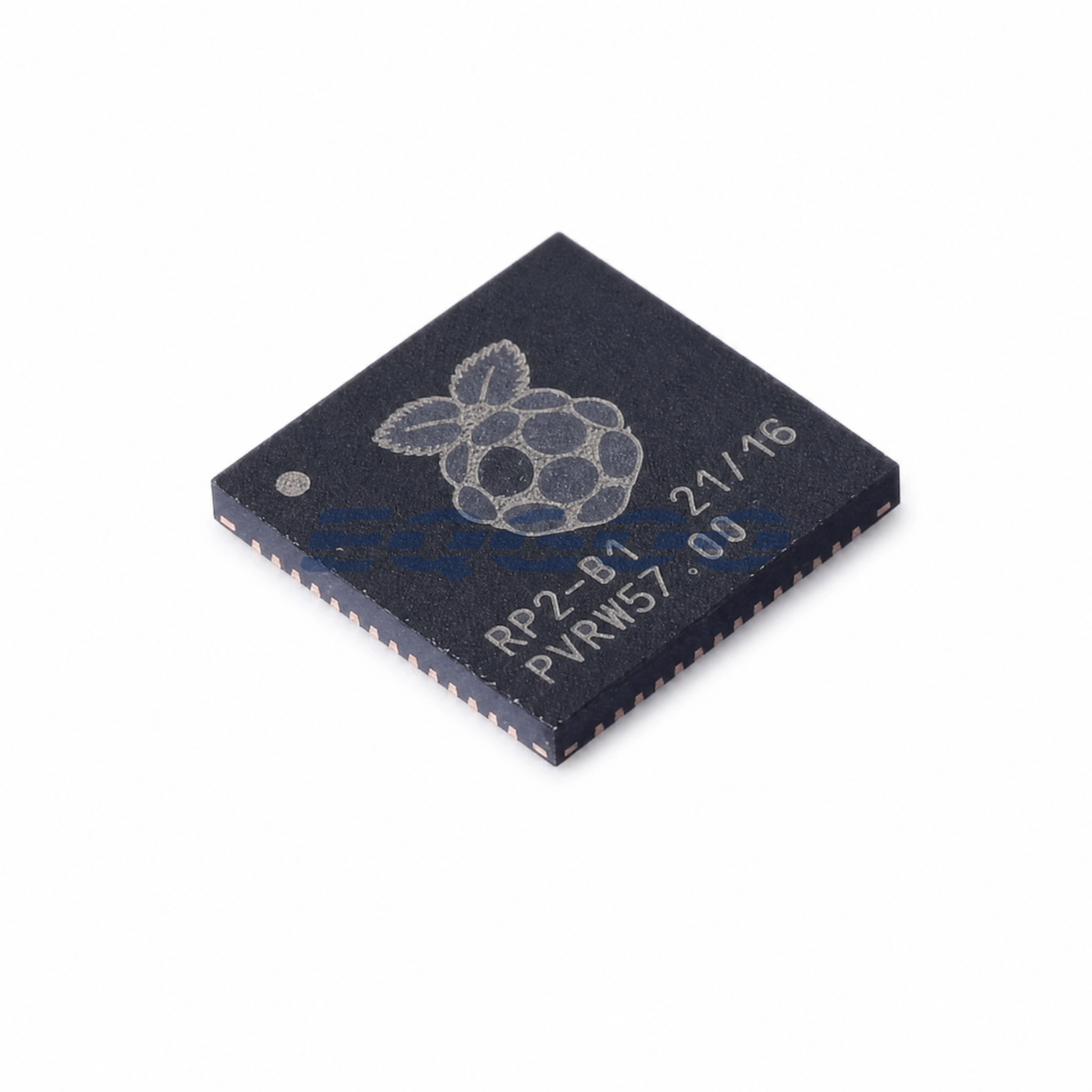
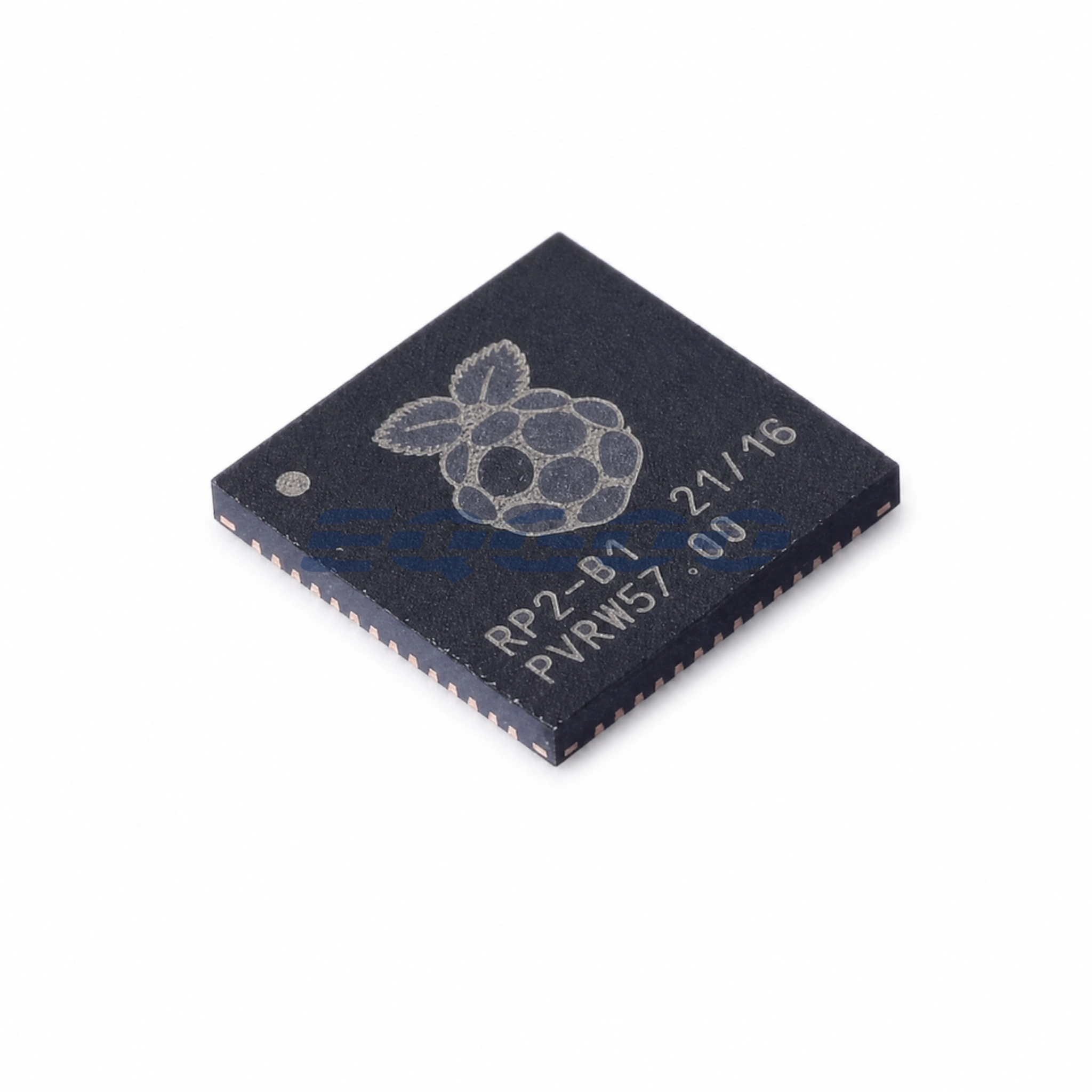
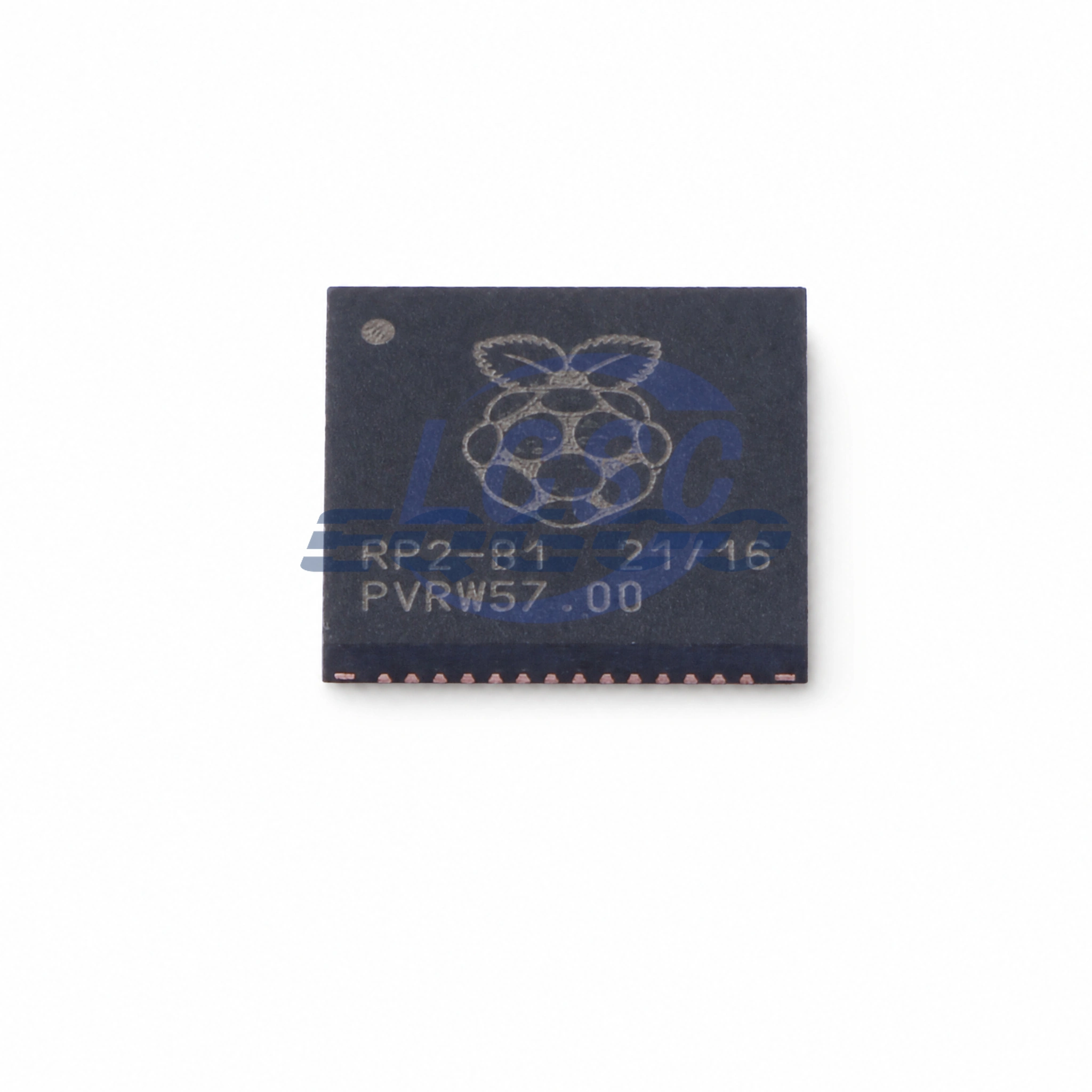

Key Selection Information
| Selection Parameter | Confirmed Information |
|---|---|
| CPU | Dual-core Arm Cortex-M0+ |
| Maximum Frequency | 133 MHz |
| On-Chip SRAM | 264 KB |
| On-Chip Flash | None; external QSPI Flash supported |
| Programmable I/O | 8 PIO state machines |
| USB | USB 1.1 controller + PHY, host/device |
| GPIO | 30 |
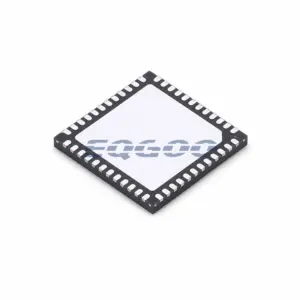
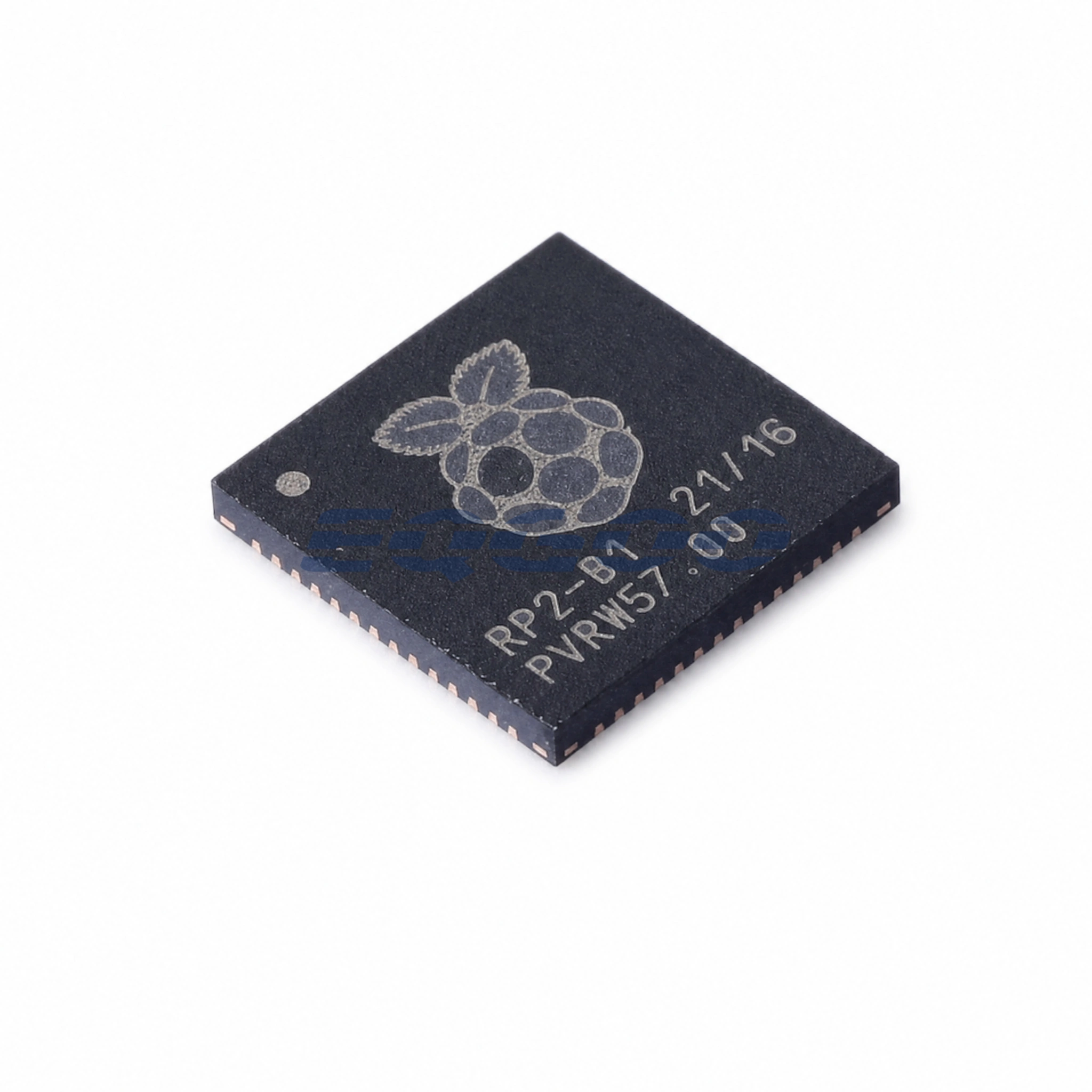
| Package | QFN-56, 7 × 7 mm |
Product Overview
RP2040 is Raspberry Pi’s standalone microcontroller built around two Arm Cortex-M0+ cores and 264 KB of on-chip SRAM. It runs at up to 133 MHz and is packaged in a compact 7 × 7 mm QFN-56. Unlike many microcontrollers, RP2040 does not contain embedded program Flash; code is normally stored in an external QSPI device and executed through the dedicated XIP interface.
The distinctive subsystem is programmable I/O (PIO): two PIO blocks provide eight state machines that can implement timing-sensitive or unusual digital interfaces independently of the main CPU cores. This makes the part useful where fixed UART/SPI/I²C peripherals are not sufficient or where protocol timing should be offloaded from software.
Technical Specifications
| Group | Parameter | Value / Condition |
|---|---|---|
| Core | Processors | 2 × Arm Cortex-M0+ |
| Core | Clock | Up to 133 MHz |
| Memory | SRAM | 264 KB |
| Memory | Nonvolatile | No on-chip Flash; external QSPI/XIP |
| Serial | UART | 2 |
| Serial | SPI | 2 |
| Serial | I²C | 2 |
| PWM | Channels | 16 |
| PIO | State machines | 8 |
| USB | Controller / PHY | USB 1.1 host and device |
| GPIO | General-purpose I/O | 30 |
| Analog | ADC inputs | 4 GPIOs can be used as analog inputs |
| Package | Type | QFN-56, 7 × 7 mm |
| Operating | Temperature | -40 °C to +85 °C |
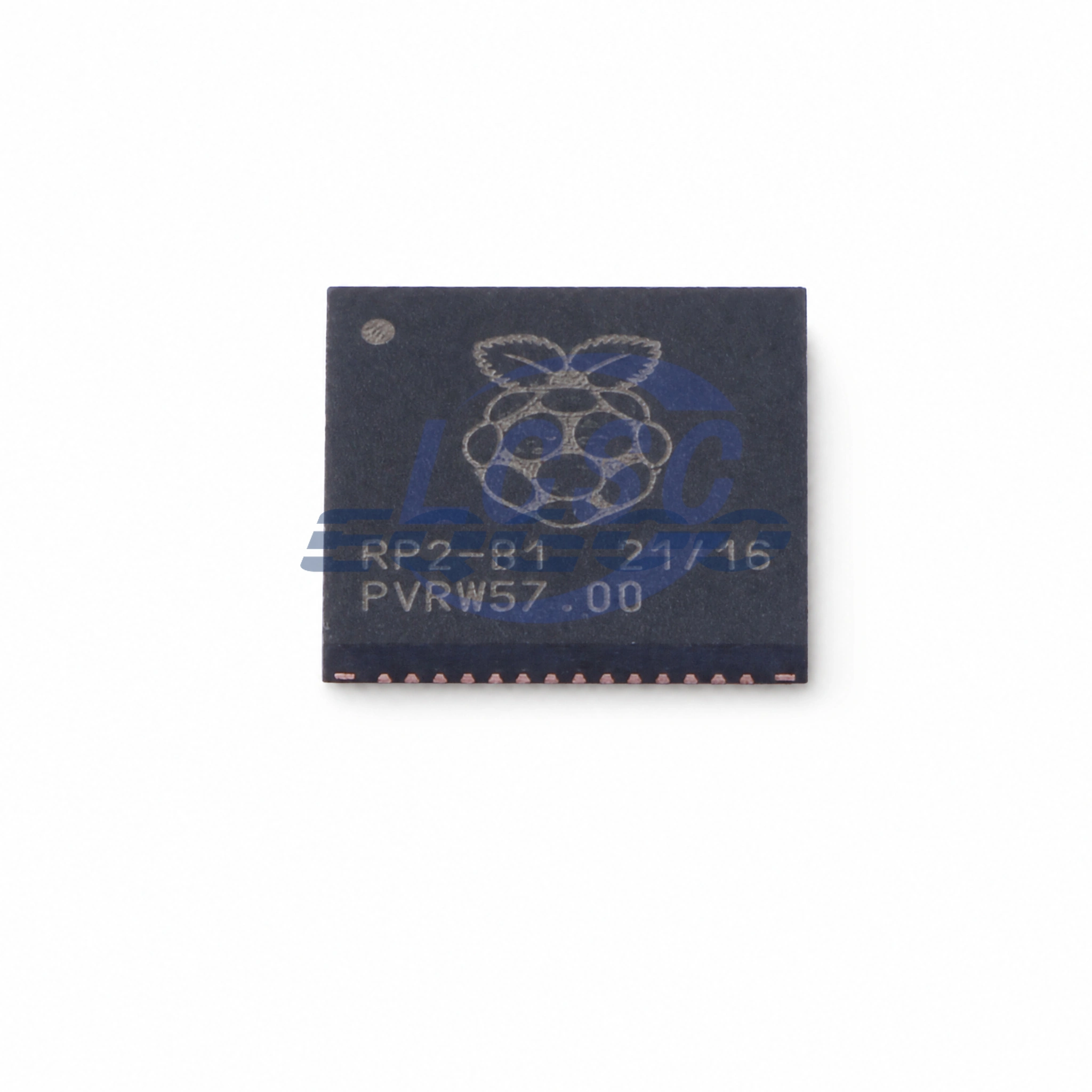
Product Status
| Item | Information |
|---|---|
| Manufacturer Status / Lifecycle | Expected production through at least January 2041 |
Raspberry Pi states that it expects RP2040 to remain in production until at least January 2041.
Functional Highlights
PIO expands the practical interface set
Eight programmable state machines can generate or capture deterministic digital waveforms, allowing board designers to implement custom serial protocols or offload repetitive I/O timing.
External Flash is a board-level requirement
RP2040’s 264 KB SRAM is on-chip, but application firmware normally resides in external QSPI Flash. Memory capacity, package, routing and boot compatibility therefore belong in the hardware selection decision.
Applications / Application Fit
- Custom-interface controllers using PIO
- USB-connected embedded devices
- Motor and lighting control with PWM
- Data acquisition and instrumentation with deterministic I/O
Design Considerations
Budget external QSPI Flash and its routing from the beginning; RP2040 does not include on-chip program Flash.
Use the six SRAM banks and DMA architecture thoughtfully in high-throughput designs to reduce contention.
PIO is powerful but application-specific: reserve enough state machines and GPIO resources for the intended custom interfaces.
Related Engineering Resources
- Raspberry Pi official product/family page — manufacturer-controlled product information and documentation.
- RP2040 verified Datasheet PDF — identity-verified PDF hosted on HKEQGOO assets.
Quality & Verification Support
Third-party inspection or testing can be arranged according to customer requirements. Testing fees are borne by the buyer. Additional verification requirements can be discussed before shipment. After an order is placed, physical product, label, packaging, and Date Code photos may be provided where appropriate.
Request a Quote
To request a quotation, provide the manufacturer part number, required quantity, destination, target Date Code if applicable, and any testing or inspection requirements.